
Most of us know deep down that a good massage helps alleviate pain, stress and anxiety, and helps promote flexibility and looking younger. Why is it then that most casually dismiss the benefits of an occasional rub, even though they may be needlessly suffering some, or even all of the above symptoms?
Read on to find out more about how massage could help you.
Massage is a pillar to physiotherapy, in fact physiotherapy started with four lady masseurs in the late 1800’s, who could see the benefits of hands-on therapy. Of course, physiotherapy has grown in capability massively since then, in line with our greater understanding of the physical body, in part due to vastly improved scanning technology. Rather than diminish the significance of massage, however, this increased knowledge has only served to amplify its benefits.
Thus, just as its founders recognised over 100 years ago, massage remains an essential tool in the physiotherapists toolbox. A well-trained therapist will use his or her hands not only to treat, but also diagnose, as they will be able to pick up tight muscles, knots and problems in connective tissue that would be totally invisible to even the most advanced scanning technology available today.
Massage is not just for the physical ailments, as it can equally help resolve locked in stress and anxiety, which resides in the stomach and gut. (Have you ever noticed when you are stressed or upset that you so often suffer an upset stomach? That mind-body link is so often overlooked and yet so important to overall wellness)
Physiotherapists make massage an integral part of their treatment to rejuvenate health for 7 reasons:
M is for movement of your connective tissue, allowing the layers to slide, rejuvenating cells, and giving a flexible youthful glow to the skin. Stimulating fibroblasts to make youthful collagen, keeping your skin soft and supple, looking younger.
A stands for Anti-Aging, accelerating blood flow, boosting circulation, oxygen and nutrients and invigorating your body’s vital systems enhancing longevity.
S signifies stress release, melting physical and mental anxiety, promoting wellness.
S for stimulation of the lymphatic system, crucial for detoxifying your body and boosting your immunity. We also use deep oscillation through our hands on technology that boosts stimulation.
A alleviation of pain, targeting and releasing sore trigger points and stretching out tight muscles
G denotes greater flexibility, stretching and loosening the muscles and joints, improving your range of motion.
E is for emotional balance, harmonizing your body and mind, elevating your mood, and fostering emotional resilience.
If you want to step into a physiotherapy session that embraces peace and vitality, then find someone like us that combines massage within physiotherapy.
Whether you are looking to relieve chronic pain, reduce stress or speed up the rehab of a sports injury, come over to our physiotherapy sanctuary.
Ready to embrace a healthier, relaxed, more vibrant you and let the healing begin?
Give us a call to find out more.
If you are in pain, we can help
or call 01889 881488
Jean, Erica & Charlotte will be happy to help
Have you ever been haunted by a knife-like pain down your leg? Not just down your leg but in every aspect of your life. Making the simplest of tasks, like putting your socks on, impossible.
Imagine a pain that shadows you from the moment you get up and even haunts you at night, stopping you from sleeping.
You are not alone. Nearly half of us have suffered this at some time in our lives.
To learn more about sciatica and how to treat it, read on
It’s called sciatica and its root cause is a modern lifestyle of poor posture and weak muscles.
The videos explain what sciatic is and how the structure of the spine is vulnerable.
The sciatic nerve is a big nerve running from the back to the feet. Nerves, any nerves in your body in fact, don’t like to be squeezed and tell you quickly about this by causing pain. Typical causes of nerve compression are:
• Spinal discs act as cushions between the bony vertebrae, allowing movement and keeping the discs nicely spaced apart, allowing nerves to move freely and without pain. If those discs get compressed sufficiently, nerve compression and pain can result.
• Powerful back muscles can react to this nerve compression and go into spasm, increasing nerve compression and pain.
• Each pair of spinal vertebrae have joints between them to help control movement, called facet joints. These joints get worn with age and trauma and can eventually cause further nerve irritation.
• Our bodies are covered in a layer of connective tissue below the skin (imagine bubble wrap) and this tissue can become less flexible as we age, also leading to possible nerve irritation.
These underlying causes are nearly always quickly reversible with the correct lifestyle adjustments, adherence to exercise prescriptions and hands on physiotherapy. In more severe chronic cases, especially with locked in muscle spasm, specific dry needling may be required. There’s no one size fits all solution. A thorough assessment and treatment plan will be the most effective and fastest solution.
If your physiotherapist has any concerns, she or he can touch base with your doctor for bloods, x-rays or a scan.
Off the shelf pain meds, like anti-inflammatory with paracetamol can help. Your pharmacist can advise if its safe for you to take them with preexisting conditions or other meds.
or call 01889 881488
Jean, Erica & Charlotte will be happy to help
Breaking Point
Breaking Point is my sixth book, currently being written and hopefully in the shops by autumn. It’s atransformational fiction – solving & healing a spiritual murder mystery.
This story embarks on a journey of discovery, revealing how hidden traumas lodged deep within the body can be unearthed and transformed through innovative treatments.
Drawing upon the wisdom of over 100,000 orthodox treatments, this narrative entwines a spiritual essence, sharing my unique perspective on healing.
Through the compelling lives of fictional characters, I explain the process of identifying and addressing the root cause of your pain points with this distinctive healing approach.
I also have a book group on my Facebook pagewhere I release early drafts of ‘Breaking Point’ to seek constructive input. If you feel you would like to contribute and join my group, go to Facebook and search for ‘Nicky Snazell’ then request being a friend. Once you are accepted, you can ask to join the group.
If you would like to read the prologue to ‘Breaking Point’ then read on.
Breaking Point Prologue
Dear Reader,
Imagine you and I have time travelled together. We are standing together in the most beautiful garden on a balmy summers day, rose borders as far as the eye can see. The most immaculately trimmed lawns. Breathtaking old trees creaking in a gentle breeze, emitting wispy shadows as the sun weaves through the leaves. Gnarled, majestic Oaks to regal Ashes to elegant Silver Birch. In the near distance an iridescent lake with a shimmering green blue hue. It seemed to be a balmy early summer kind of day with fluffy white clouds and the sun shining through. I look down to see I am wearing a very pretty but faded long grey dress, a beautifully ironed crispy white apron with lace around the edges and old scuffed shoes.
You’ve noticed your clothes have changed too, haven’t you?
There is a rug spread out on the lawn and on it a simple basket full of sandwiches, cakes and homemade lemonade. There are three children close by. I know them as mine. Edward, my youngest at six, is playing with his box of alphabet bricks and chuckling to himself. Despite his health issues and missing a lot of school, he keeps learning as we teach him at home with the help of Nanny Nicole and Lady Jane, while I am kept busy housekeeping and cooking.
Edward loves playing and giggling with little Miss Penelope and she will be carried across soon to crawl on his rug to fill our day with joy.
His handsome father, Gwyn, the butler, ensures both his and Edwards little heart remains strong, swimming daily in the stately home pool. Sadly they share the same weak heart condition, caused by a genetic problem but also having personality’s overspilling with joy and loving kindness.
The sun is shining off Ted’s golden locks and I smiled at his little suntanned knees messing up his hidden slice of cake. I can hear the thump of a ball being thrown between his taller, short tempered and clever older brother John, who is ten and his strong minded but caring freckled- faced older sister Dorothy, who is eight. She attends the local school and helps with the chores. John is quite a handful and clearly getting irritated at his sister’s poor attempts at catching. He struggles to entertain his younger sister and brother but shines in his own right, bound for a successful career with his brilliant mind and boarding school education. Lord Charles is very kindly sending our eldest John to boarding school to gain a superb education. I am very proud.
As I look down, I see that Edward had mis-spelt ‘lof u’ with his wooden blocks. I spell it out again, ‘I love you too.’
Dear Reader, could you ask John and Dot to keep an eye on Ted as Nanny hasn’t arrived yet and I need a rest before I return to the house to prepare the vegetables for dinner and serve the family afternoon tea and cakes.
I stretch out, loosen my large white apron and have a snooze in the suns warm rays.
My rest is shattered, I awake to the screech of brakes and a tragic scene before my eyes. It feels as if everything has shifted, changed. I sense a deep fear, a dreadful rolling sensation in my stomach.
Ahead of me, I see a still, lifeless little boy, my Edward, just by the bend in the road which weaves down from the elegant stately home. No, no, no I scream. My beautiful child, I love him more than life itself. As I run to his motionless, still body I tell myself he that he must be asleep and he will wake up. My boy, my loving kind gentle, six year oldangel. His familiar little pale arms, outstretched. His curly, soft blonde hair and innocent cherub face with such long eyelashes over his closed eyes.
I had constantly dreaded the day he may collapse due to his heart condition, but nothing had prepared me for this.
Reader, can I take your hand for strength. Can you see this aura of blinding golden light around Edward?
I look down on his long dirty white socks, clean on this morning, his favourite little scruffy shirt, his torn teddy bear and his wooden cubes scattered.
There is something hauntingly familiar about this scene. As if I have been here before.
I know he’s not just asleep, a mother knows when her child is not breathing and dead. Yet I do not feel disconnected, as his shimmering soul is still here.
In my head I hear the words; “Mummy I can’t leave you.”
I'm suddenly aware of distant urgent shouts. I glance across towards the lake, as the dream shifts to a shimmering old vintage car, an exquisite red. I feel myself floating towards the car and as I get closer, I can see the water is starting to rise up inside the car. Fortunately, the car is not deep in the water but only three figures appear to be moving. Lady Jane, Lord James and Lord Charles, all screaming and crashing around as Lord James got his shoulder against the windscreen. Something feels very wrong, I can’tsense the presence of my Gwyn. I get closer, I gasp and tighten my grip on your hand, as I see that the driver, my darling husband, my soul mate, is slumped over the wheel echoing the stillness of our son.
I want to scream but there’s no voice inside me.
My children John and Dorothy were already by the car. The gardener, cap in hand, running in wellies, just shouts at me in terror.
I hear Dorothy start to scream as she spots her father.
I look around and the prettiest petit lady, Nicole, wearing her Nannies uniform and again an old fashioned starched white apron, runs towards me saying hold Penny, Lady Janes daughter. This toddler in a beautiful white dress and ringlets adores Edward. Nicole is sobbing as she rushes back to Ted’s lifeless body.
As I turn around to glance through tears at my tiny boy, hugging Penny tight, I see that a shimmering light surrounds him and is glowing brighter, an amazing golden glow. It stays there, then a ghost like image of my little body sits up and his cherub like, tear stained face looks towards me and says “you're next.”
“You too will be killed Mummy unless I stay with you and together we can save another soul. I will protect you, for I’m your guardian Angel and will always be in your heart, never far away and I shall pass over with you into your next life.”
I see this glow, this faint outline of my son, move over me and in me and I feel a deep sense of love and connection. The sense of deep loss goes. Just the grief for his physical presence remains as a dagger like pain. I feel his protection, love, and an eternal bond that transcends physical existence.
I wake up and I'm back in my bedroom again in 2024, damp with perspiration, bed clothes on the floor, my eyes wet with tears and my throat dry from screaming.
It’s nothing new to me to have dreams about past lives, but this recent reoccurring dream is now every night. It is getting tedious.
I know something is a foot.
Do you ever dream like this dear reader?
Can you join me in unravelling this mystery of who took the lives of this son and father and who now threatens mine?
If I may ask, are you happy to help me with this dilemma?
Would you come on a healing journey with me, to peer through the lens of my characters?
I was born with a secret gift beyond healing, a kind of telepathy that connects me to those both present and past, or rather passed. A sixth sense. At times conveying strong messages through dreams and visions.
I must say, I have never had such a repetitive dream. I was nearly reaching breaking point, on the brink of despair with this unrelenting nightmare returning night after night. Especially at such a profoundly inconvenient time, as I had been writing a book about the ramifications of the Pandemic and the surge for virtual medical consults. It appears destinyhad spoken and told me to rip that book up and rewrite a new version. The universe had chosen a different narrative for me to explore with you. It seems I am to write a different book so I must trust the time must be right to do this.
Blackie, my rescue cat was visibly irked. As a streetwise cat, he saw me as a soft touch, perceiving my soft hearted nature and had soon exchanged my heated greenhouse with its cozy cat basket for the house and bed.
His sleep had been disturbed yet again and he needed to express his frustration, so he scratched up the bed and carpet again.
Then went straight under the duvet.
I gave myself a shake which sent Blackie flying into an unintended orbit. I told myself to get a grip, to get showered, grab a cup of earl grey tea and get to my clinic, as there would be a list of folks waiting for me with hidden pain to seek out and kill.
or call 01889 881488
Jean, Erica & Charlotte will be happy to help
Radial shockwave provides a non-invasive gentle treatment, designed to alleviate pain and speed up recovery from injury. Despite what the name might suggest, it does not involve any kind of electrical shock treatment. Instead, it sends low energy pressure waves into damaged tissues to stimulate the body’s natural repair process, speeding up recovery and reducing inflammation.
A common concern is that treatment will be painful and the answer is reassuringly no. In fact, most clients describe the sensation as being similar to a gentle tapping on the skin.
This non-invasive treatment is very effective in treating problems such as:
- Plantar Fasciitis
- Calcified tendonitis
- Chronic tendon problems (tendinopathies)
- Achilles
- Knee
- Elbow
- Shoulder - Muscle tightness
- Legs
- Buttocks
- Spine
- Arms
We have made shockwave a standard part of the treatment we offer and have kept to our ethos of providing the best value treatment we could by providing shockwave at no extra charge. This is something we still do today and our clients love the fact that is an integral part of our hands on treatment capability.
or call 01889 881488
Committed to provide the best treatment value to you
Our clients love shockwave and we also found that they liked a device called a V-ACTOR, which is a very powerful vibrational therapy tool, the power coming from the shockwave internals. Understandably our V-ACTOR has been sought after but only having one on site has restricted access at times.
Our major focus, however, has been on the shockwave treatment and over the years as demand grew we added more shockwave machines, eventually having four.
Top Quality Treatment. Available to you at no extra cost
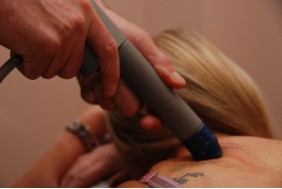
But our ethos remains the same – we want to provide the best treatment we can and that means the best hands on treatment, and for us that has to include both shockwave and vibrational therapy. Thus, we have taken the decision to add two more high quality shockwaves and both include the much loved V-ACTOR vibrational therapy. They are already on site and are available to you at no extra cost should you need it.
Having six shockwaves on site is perhaps a sign of our commitment to provide the best treatment value to you.
Jean, Erica & Charlotte will be happy to help
or call 01889 881488
You may have heard of gait analysis, you may even have visited your local running shop and had someone check your running out before buying the latest running shoe, but not all running gait analysis is equal and here’s why!
What if I told you that gait analysis is about more than just pronation and supination of the foot!
It's quite a bit more in fact.
or call 01889 881488
Footwear can play a big role in how your body reacts to the forces of running, but researchers have shown that some of the biggest injury risk factors are linked to your running form.
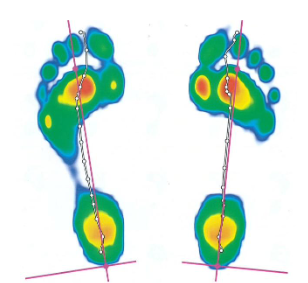
Understanding your gait for analysis
Improving your running form takes a rigorous process looking at the movements of the entire body. Our biomechanics team use `video gait analysis combined with industry leading Footscan plantar pressure data to distinguish between normal and pathological gait. This technology has been utilised in more than 3,000 scientific studies, trusted by state-of-the-art movement labs and elite sports teams worldwide.
It can also help us to make informed decisions on how best to manage your injury, be it through bespoke rehabilitation plans, running technique and coaching advice or custom orthoses.
Using Footscan we can design bespoke orthoses to aid with injury rehabilitation and performance, the same ones used by countless elite marathoners and footballers, should there be a need for them.
Aside from injury management, we also use our gait lab to help assess running technique with a view to improving running economy and performance. We can even predict overuse injury risk which is a leading cause of injuries in runners and military personnel.
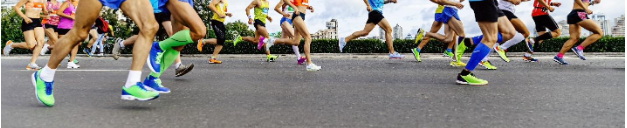
From the moment you contact the ground to the moment you push off, your stride pattern speaks volumes about your injury risk and running economy, as such by analysing movement patterns and detailed data about your gait biomechanics we can really start to understand a lot more about how you could potentially move more efficiently and improve your running economy.
So, whether you are training for a marathon, or embarking on your couch to 5k this spring, we can help you solve those niggling injuries, or even unpick the lock to your next personal best!
We can help
or call 01889 881488
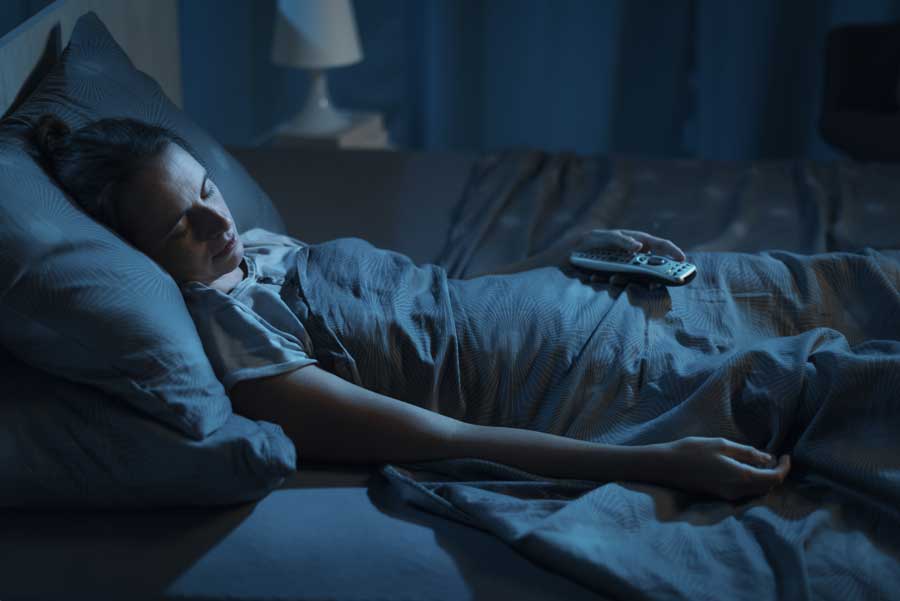
Who doesn't love the feeling of a good night’s kip?
Yet, many of us complain either of not getting ENOUGH sleep or good enough QUALITY of sleep to have us springing out of bed like a child on Christmas morning, ready to take on the day.
While sleep is far too complex a topic to sum up in numbers only, being aware of some of the basic statistics about sleep can help you to grasp just how prevalent a problem sleep deprivation is, and how a lack of Z’s can have a much wider impact on your health than you may expect.
the stats
- Approximately 10-30% of adults struggle with ‘chronic insomnia’, rising to 30-48% in older adults
- Women are 40% more likely to experience chronic sleep deprivation relative to their male counterparts
- 5 million Brits routinely have less than 5 hours of sleep per night
- Over £40 billion is lost to the economy annually due to sleep deprivation
- In a 2007 study of 10,000 people, those with insomnia were five times as likely to develop depression as those without.
- According to a 2004 study, people who sleep less than six hours a day were almost 30 percent more likely to become obese than those who slept seven to nine hours.
WHY IS SLEEP SO IMPORTANT?
Other than feeling energised and well rested, sleep is CRUCIAL for a number of our bodily processes, including ‘cognitive processing’ (the organising and retaining information), hormonal rebalancing and growth and repair, to name a few.
As physios, we are primarily interested in a hormone called ‘growth hormone’, which gets released into the blood stream during REM (Rapid Eye Movement) sleep to help repair soft tissue structures all around the body. Routine disruption to your sleep cycle therefore, doesn’t just leave you feeling dog-tired; it can also have a significant impact how well you heal from injury, and can adversely affect subsequent pain levels.
WHAT IS GOOD ‘QUALITY’ SLEEP?
The recommended number of sleep hours for the average adult is 7-9 hours, but why is this so universal?
Sleep as a process can be broken down into 4 key stages, with a whole cycle taking approximately 4 hours to complete. For optimal sleep, it is recognised that most people need to complete 2 full sleep cycles per night, ideally undisturbed!
When we consider 3am trips to the bathroom, snoring partners, pets in the bed, late night working, and too much caffeine, that earlier statistic doesn’t appear to be so shocking now does it?
So what can you do to set yourself up for sleep success?...
TOP 5 TIPS FOR A GREAT SLEEP
To set yourself up for a great night sleep, it’s best to think of easy and manageable changes you can make immediately to help your tune into your body and brain clock.
- Set a firm time for sleep and for waking
Setting a firm routine for when you go to bed and when you wake isn’t just for children. Following a set time, across a 7 day week, helps to tune your body and brain clock into a regular rhythm, signalling when it’s time to sleep and when to rise. After some time, this rhythm becomes engrained, making it automatic.
- Check your room temperature
When asleep, our body temperature naturally reduces by 1-2 degrees, therefore ‘overheating’ can be a common cause of sleep disruption. Turning your bedroom temperature down to an optimal 18 degrees avoids disturbance to your sleep by keeping your body temperature more stable.
- Utilise your sense of smell
Certain smells can help to induce sleepiness. Placing calming smells like lavender (pillow spray, essential oils) in the sleep environment / bedroom can help to trick your brain into winding down for sleep.
- Don’t eat at least 2 hours before bed
Ingesting food close to bedtime signals “wakefulness” to the body/brain, as there is now a need for food to be digested. Where possible, have your last mouthful 2-3 hours prior to sleep, which includes milk in coffee/tea.
- The two S’s rule
Your brain makes connections between spaces and activity. Try and utilise the bedroom for the two S’s - sleep and sex only. Where possible, keep laptops, iPads and mobiles out of the bedroom to limit the temptation for late night working/ scrolling.
If your poor sleep is due to Pain through back, legs, hips or neck for example then you can consider seeing a Physiotherapist at Pain Relief Clinic to help relieve this pain for more undisturbed sleep.
If you are stressed, then you can also consider a massage at our Stafford clinic.
If you found this article useful, check out our other health blogs,
also available on the website.
One of the first questions any patient asks when obtaining an injury is ‘how long until it gets better’... If only an answer were simple.
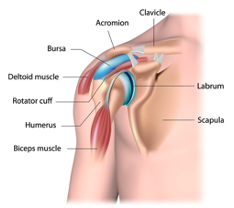
Unfortunately, when it comes to the shoulder joint, the answer isn’t straightforward at all because your shoulder is one of the most complicated joints in your body.
To achieve the wide range of movement that the shoulder provides, it requires a combination of muscles from body to shoulder blade (scapula), body to arm bone (humerus) and shoulder blade to arm bone. Due to this complexity, it is one of the most susceptible joints in the body to injury.
The shoulder is made up of three bones, the upper arm bone (humerus), the shoulder blade (scapula) and the collarbone (clavicle). There are joints between the clavicle and scapula and between the scapula and humerus.
The stability of the shoulder is predominantly controlled by four muscles, commonly known as the rotator cuff. They are tasked with keeping the joint properly centred and located.
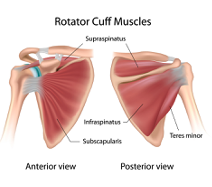 These are
- Supraspinatus
- Infraspinatus
- Subscapularis
- Teres Minor
Common Shoulder Problems
The most common shoulder injuries are:
- Rotator cuff tears/tendonitis
- Impingement
- Instability
- Frozen Shoulder
- Bursitis
- Osteoarthritis
Rotator Cuff Tears
The rotator cuff muscles and tendons are an important part of the shoulder and are tasked with keeping the bones of the joint together across its wide range of motion. Rotator cuff tears account for more than 50% of shoulder injuries and are most common in people who repeatedly perform overhead motions. Thus athletes involved in sports such as swimming, racquet sports and weight lifting, which all require repetitive overhead movement, are particularly prone to injury.
Typical symptoms of a rotator cuff tear will be pain at night disturbing your sleep, and probably some lessening of pain during the day, although any overhead movement or even reaching behind your back is likely to be painful. You will also probably experience weakness in the affected arm. If left untreated, the pain will most likely increase over time.
Keen athletes may be tempted to continue in their favourite sport, in the hope that the pain will recede, but this will most likely aggravate the situation and, over time, may make the condition worse. If you suspect a rotator cuff tear, it is strongly advised to seek help from a qualified physiotherapist or sports therapist as soon as possible, as some conditions, such as a full-thickness supraspinatus tear, can become irreversible if left too long.
Impingement
Rotator cuff tendons can become trapped between a bony projection of the shoulder blade called the acromion and the top of the humerus (arm bone). Particularly prone is the supraspinatus tendon, this muscle is responsible for moving the top of the arm sideways from the body for about the first 15 degrees of arm movement.
Impingement problems can be caused by a number of factors, including:
- Loss of scapula – humeral rhythm
- Nerve interference or injury from the neck to the shoulder, causing abnormal movement of the shoulder
- Poor posture
- Tears and inflammation of tendons
Instability
Recent dislocation, sudden injury or overuse can each cause shoulder instability. The head of the upper arm bone can glide out of the shoulder socket (glenoid). This can occur when the capsule and ligaments that have the role of stabilising the shoulder in the socket have not healed properly and remain stretched making them too loose to keep the shoulder stabilised. This can result in repeated dislocations.
It is, therefore important to seek treatment. Rehabilitation and soft tissue work can be provided by qualified physiotherapists or sports therapists to help strengthen the muscles and ligaments and help to gain stability around the shoulder joint once more. It is advisable to seek help sooner rather than later.
Frozen Shoulder
This condition, medically described as adhesive capsulitis, can literally develop overnight. The capsule of the joint becomes inflamed and stiff, resulting in restricted movement. Eventually, the shoulder ‘freezes’ and becomes immobile for a few months to a year.
However, a frozen shoulder does typically progress in three main stages:
- Freezing stage- any movement of your shoulder causes pain, and your shoulder's range of motion starts to become limited.
- Frozen stage- pain may begin to diminish during this stage. However, your shoulder becomes stiffer and moving it becomes more difficult.
- Thawing stage- The range of motion in your shoulder begins to improve.
Bursitis
A bursa is a fluid-filled sac that act as a cushion to stop friction between the muscles and bones as they glide over on another. You have several in your shoulder, one being one of the largest in the body which is located towards the top of the arm.
After an excessive repetitive motion of the shoulder, the bursas can inflame and swell. The pain is normally a gradual onset located on the outside of the shoulder which can spread down the arm. It can become more aggravated when lying on the shoulder or if you’re using your shoulder anywhere from 60-90 degrees up and outwards.
When treating Bursitis, the aim is to control the inflammation. If you don’t seek help, often the pain will become worse and become impinged.
Osteoarthritis
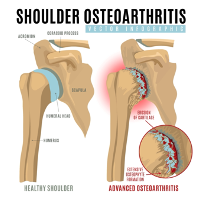 This is when the normally smooth cartilage that covers the ball and socket joint diminishes after constant friction leaving bone to grind against bone. It develops slowly and the pain worsens over time, normally after chronic wear and tear or work injuries. Symptoms may include swelling, pain, and stiffness.
Osteoarthritis is a chronic problem which cannot be resolved, but the symptoms of the condition are amenable to pain-reducing treatment.
Every shoulder injury will present differently, and everyone’s perception of improvement will be different too. For example, one patient may be over the moon for gaining an extra 10 degrees in pain-free shoulder motion. Whereas the next will be happy only when gaining their full range of motion back.
Many biological, psychological, and social factors are involved during the recovery process after a shoulder injury.
If you are suffering from shoulder pain, we can help
Call 01889 881488 Now
Jean, Erica & Charlotte will be happy to help
The knee is the body’s largest joint and made up of four bones; the shin bone (tibia), the thigh bone (femur), a smaller bone on the outside of the leg (fibula) that attaches to the shin bone and helps support body weight, and the knee cap (patella). The knee joint is called a hinge joint, as it can bend, straighten and twist.
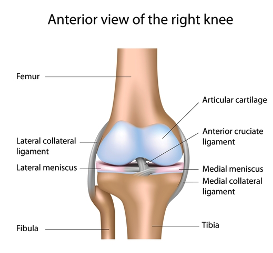
Each of the ends of the bones in the knee are covered in cartilage to protect the bones and let the joint move smoothly. Between the bones in the knee, there are 2 wedge-shaped pieces of cartilage, called meniscii. These are the shock absorbers and help cushion the joint from impact.
The knee joint is held together by ligaments which make the joint stable. There are four main ligaments in the knee. There are the collateral ligaments which run down the sides of the knee, which help to limit sideways movement of the joint and support against unusual movement. Then there are the cruciate ligaments, which are inside the knee and cross each other, to control back and forth movement in the joint.
Another factor in knee stability is muscles which also provide power and are the reason the joints can move. The knee is surrounded by strong muscles. The quadriceps are the front thigh muscles and they work to straighten the knee. If they are weak then this can lead to instability of the knee and kneecap. The hamstrings are the muscles on the back of the leg and their job is to bend the knee.
Which are inside the knee and cross each other, to control back-and-forth movement in the joint.
Another factor in knee stability is muscles which also provide power and are the reason the joints can move. The knee is surrounded by strong muscles. The quadriceps are the front thigh muscles and they work to straighten the knee. If they are weak then this can lead to instability of the knee and kneecap. The hamstrings are the muscles on the back of the leg and their job is to bend the knee.
Common knee injuries/conditions:
Knee ligament injuries – Normally from an accident, whether a slip, trip or fall. As mentioned above there are several different ligaments that support the knee. If you think you may have injured one, it is important that you see a Physiotherapist/Sports Therapist who can examine your knee to diagnose which ligament is damaged and how badly.
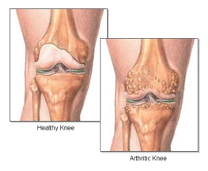 Osteoarthritis - wear and tear of the cartilage in the knee is called Osteoarthritis and is a common cause of pain. It may be aggravated by biomechanics, previous injury, overuse or the simple effect of years of living. Osteoarthritis symptoms can be relieved with orthotics, exercise and pain-relieving treatments.
Cartilage injuries – often caused by sudden twisting, the cartilage between the knee can get damaged. If this is the case the knee needs strengthening and there may be a chance that surgery is required. It is crucial that you have a proper assessment to determine the best course of action.
The Impact of Leverage
When we can’t undo a tight nut, we reach for a longer spanner to give us more leverage. It’s a concept we all understand.
This same leverage principle applies to our knees as well because for most of the time the centre of our weight is not directly over our knees. Try looking sideways in a mirror and bend your knees and you will see that your knees are in front of the trunk of your body. Hence your body weight is applying leverage on your knees. As you bend your knees further, your knees get further in front and the leverage increases, just like using a longer spanner.
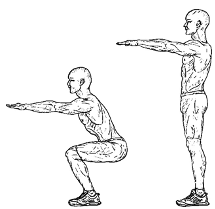
The implications of this leverage are that in normal walking your knees have to support 4 times your weight. If you crouch down it can go as 9 times your weight. No wonder then that if we carry excess weight, our knees will take the brunt of that, which means that knee problems are likely to be more likely with excess weight.
The good news is that most of us have the capability to do something about our weight. A simple change in diet and a bit more exercise is all it usually takes. And, of course, the motivation to do this.
Most common knee injuries in sports
The knees are frequently injured due to the stress of frequent starts, stops, twists and turns applied to the joint during exercise.
- The most common injury in the knee is knee ligament injuries. This normally occurs from an accident, whether a slip, trip or fall. The ligaments’ main role is to stabilise the knee so the knee might experience a sudden twisting motion, a rapid change in direction, or an incorrect landing from a jump. Sometimes you can hear a pop, or a snap followed by swelling and a loss of range of motion. It is important to see a physiotherapist/ sports therapist who can examine your knee to diagnose which ligament is damaged and how badly, so we can treat it sooner rather than later.
- Another common injury is to the meniscus (shock absorbers) of the knee. This can happen from general aging where the meniscus has become weak and tears after an awkward turn during normal day to day activities. Or it can happen during sports where the knee twists and pivots. You will normally feel pain, stiffness, locking and a decreased range of motion.
- Meniscus damage can take time to heal and can get worse over time if it isn’t treated properly by a physiotherapist/ sports therapist. It is crucial to have a proper assessment to determine the best course of action.
Overuse injuries are also common, including ‘runners’ knee’ or osteoarthritis.
- Runner’s knee is common in runners and cyclists. You often have dull pain around the front of the knee and can feel like a rubbing, grinding, or clicking sound in the knee cap. Your physiotherapist/sports therapist can help treat runners’ knee through a combination of massage and acupuncture. This will help relieve some of the pain and break that vicious cycle.
Looking after yourself and keeping healthy will most likely keep knees healthy too. Getting help sooner rather than later will also help massively with recovery time and getting you back to your day-to-day pain free activities.
If you are suffering with knee problems, you really need to see a physiotherapist/sports therapist sooner rather than later to correctly diagnose and then provide the best treatment possible.
Call 01889 881488 Now
Erica, Jean and Charlotte will be happy to help
The elbow joint is a synovial hinge joint in the arm and consists of three main bones: The humerus of the upper arm, the radius and ulna of the forearm. The elbow joint enables us to bend and straighten our arm.
Tennis Elbow
This is a condition that causes pain on the outside of your elbow. It is mostly caused by overusing your forearm from repetitive or strenuous motions. If these motions are a normal part of your daily routine, then resolving your tennis elbow pain can involve quite a lot of time and treatment. In the interim, you may only get bouts of temporary relief. Permanent relief will probably necessitate a change in your daily routine and a fair degree of patience. Needless to say, tennis elbow problems should always be referred to qualified therapists with access to suitable technology, such as shockwave.
A simple but effective exercise involves doing light twists of the arm and bicep curls using a lightweight. The goal is to strengthen the tendons and the muscles in you arm. You can also stretch out the forearm by placing your fingers on a hard surface and pressing downwards, stretching out both the hands, the wrists, and the forearms.
Self-massage can also be helpful and can be found on YouTube. We also offer sports massage therapies in the clinic, ask for details
Golfers Elbow
Now the difference between tennis elbow and golfers’ elbow is that tennis elbow is inflammation of the tendon where it joins to the bone in the outer elbow and golfers elbow is inflammation of the tendon where it joins to a bone in the inner elbow.
Both injuries are overuse injuries that are caused by activities that require repetitive motion of the arm and wrist. The problems of resolving pain from golfers elbow are the same as for tennis elbow, covered above.
Occasionally, for both golfers and tennis elbow you may wear an elbow brace. The purpose of the brace is to redirect the pressure over your muscles so that the injured area doesn’t take full force.
Bursitis
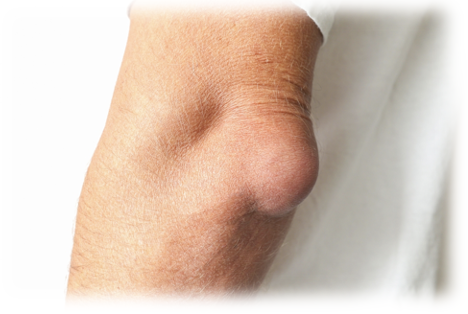 There are many bursae located throughout the body that act as cushions between bones and soft tissues, such as skin. They contain a small amount of lubricating fluid that allows the soft tissues to move freely over the underlying bone.
Sometimes the bursa may become irritated or inflamed, more fluid will accumulate in the bursa and a bursitis will develop. It becomes swollen, painful and worsens with direct pressure on to the elbow. The swelling can sometimes grow large enough to effect range of motion. It can also become red and warm to touch.
At Nicky Snazell’s clinic, you can receive two treatments for bursitis that will help alleviate acute and chronic pain. Deep oscillation and pulsed shortwave.
- Deep oscillation provides an electrostatic current that helps to increase blood flow, circulation and helps to enhance treatment outcomes as it proves symptomatic relief.
- Pulsed shortwave acts as a type of microwave that provides a high frequency electromatic energy into the body to help reduce pain and swelling. It works particularly well for bursitis.
A soft pad can ease discomfort.
Ulna nerve irritation
This occurs when the nerve in the arm becomes compressed or irritated. The ulna nerve is one of the three main nerves in the arm. It travels from your neck down into your hand and can be constricted in several places along the way.
The most common place for compression of the nerve is behind the inside part of the elbow. Ulnar nerve compression at the elbow is called ‘cubital tunnel syndrome. It can cause numbness and tingling sensations in the hand and fingers.
However, you should seek help from a therapist as there are a number of reasons you may be getting these symptoms. More often than not, the pins and needles sensation you may feel, in your hand, for example, can be coming from a different area of the body completely. It may just be referred pain you are experiencing.
Top tips to reduce the likelihood of elbow injury
- Seek early advice from a physiotherapist or sports therapist.
- Protect your joints during activity, especially during winter activities. Wear elbow pads and wrist guards
- Don’t throw through elbow pain.
- Maintain a good posture- this prevents elbow injuries from compensatory overuse.
- Consider a workstation set up, as elbow pain can develop with prolonged daily computer use with poor posture.
If you are in pain, we can help
Call 01889 881488 Now
Jean, Erica & Charlotte will be happy to help
How can I relieve neck pain? The first thing to understand is how this happened, neck pain can be caused by other conditions such as muscle weakness in the shoulders, perhaps lifestyles such as workplace seating or even sports. Take a moment to consider what could be causing yours. While doing this, think about the type of pain you have. Is it a strain or a trapped nerve?
What does a trapped nerve in neck feel like?

A trapped never typically feels more painful in certain positions, and the pain again can be shooting, described as electric or pulsing. A trapped nerve can throb and jolt when you are moving. A strain usually feels more like a burn or a tear; these sensations can be confusing, so please do not worry if you struggle to distinguish between the two - Our team can help you understand this better and decide the best ways to help you.
How long does neck strain take to heal?
A strain can take between 24-hours and a week to recover. If you are concerned Nicky Snazell can help you with pain relief, it is still worth considering what caused this. The underlying source is always the best way to provide you with long-term pain relief, and maintenance can reduce reoccurrence.
What is the fastest way to fix a stiff neck?
If you are not ready to consider treatment, we recommend gentle stretches and a gentle massage in-between cooling and warming treatments like an ice-pack and a hot water bottle/wheat/rice bag. Be careful when doing this yourself. If you are unsure how to manage this effectively, contact us.
Which massage is best for neck pain?
This depends on how you got the neck pain; if it was doing sports, then as you might expect, sports massage could be the proper treatment. Typically, massage is the right treatment for neck pain; manipulating the soft tissue can relax the problem and promote blood flow and healing.
Where can you go for help with neck pain?
Nicky Snazell pain relief clinic in Stafford can help with neck pain. Please view this page for more information on neck pain, or contact us. Our experienced team of physiotherapists will help you navigate your pain and provide the most effective advice to help you long term.