
Monday 20th October
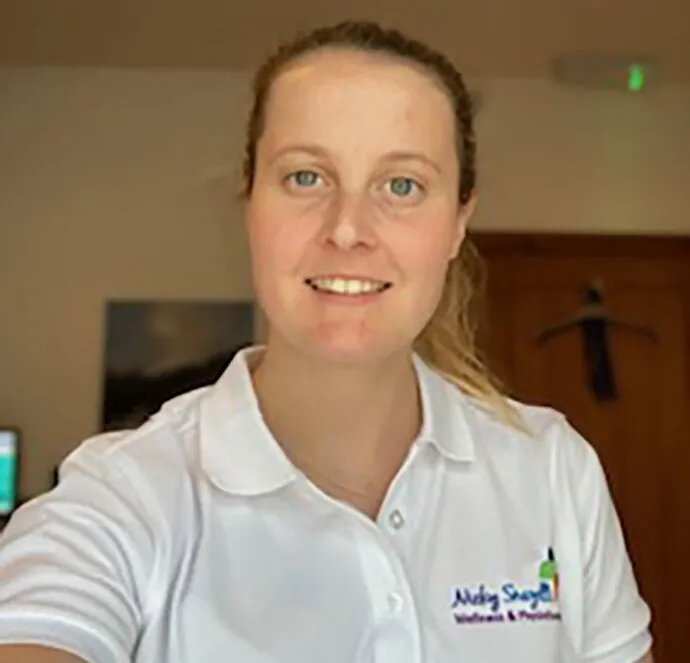
After taking 10 months off to work in Australia and then travel around the Far East, we are delighted to announce that Lowri is back in the UK and will be rejoining our clinic on Monday, 20th October.
For those of you who missed being treated by Lowri in the past and would like to be one of the first to welcome her back, now is the time to call us and book your appointment.
One thing is for sure: Lowri will never run out of exciting stories to tell you about her travels.
Book now to avoid disappointment!
Because it’s a lot more common than you may think. More importantly though is that it’s very treatable. Maybe it’s bladder leaks when you laugh, cough, sneeze or even run.
You are not alone and you don’t have to suffer in silence.

Let’s talk about something a lot of women quietly live with bladder leaks and urgency. Whether it’s a little dribble when you sneeze, or a sudden urge that you just can’t make it to the toilet in time, it can feel frustrating, embarrassing and isolating. But here is the good news. You are not alone and it is absolutely treatable.
What Is Urinary Incontinence?
Urinary Incontinence simply means involuntary leaking urine. There are a few common types:
- Stress induced urinary incontinence which is typically when you laugh, sneeze, cough, jump, run or lift.
- Urge Urinary Incontinence is when a sudden and strong need to go occurs and you don’t always make it in time.
- Mixed Urinary Incontinence is a combination of both stress & urge.
These can happen during pregnancy, after birth, during menopause or seemingly, out of nowhere. But no matter when it starts, you don’t have to put up with it.

How Can Women’s Health Physiotherapy Help?
-
As a qualified Women’s Health Physiotherapist, I am trained to assess and treat the muscles and systems that support your bladder and pelvic floor. I will work with you to:
- Understand why leaking is happening
- Rebuild your pelvic floor strength, co-ordination and control
- Manage urgency and retrain bladder habits
- Give you simple, effective strategies that fit your life
It’s always personal, private and tailored to your needs, without judgement.
If you don’t want to suffer any longer, we can help. Call the clinic and ask for an appointment with Lauren
That’s what we hear from so many women, sometimes in tears, sometimes with a nervous laugh when they finally open up about their pelvic health. Maybe it’s bladder leaks when you laugh or sneeze. Maybe it’s pain during sex. Maybe it’s discomfort that started after having a baby, or one of those “unspoken” changes around menopause. Whatever it is
- Because you think it’s something you have to live with, or
- Because it’s embarrassing, or
- Because no one ever talks about it
UNTIL NOW
You are not alone and you don’t have to suffer in silence.
Introducing Women’s Health Physiotherapy At The Nicky Snazell Clinic
We are proud to now offer a dedicated Women’s health physiotherapy service, led by our compassionate and highly skilled physiotherapist, Lauren.
This isn’t just about treatment – it’s about feeling heard, respected and supported. Whether you are recovering from birth, managing menopause, or struggling with pelvic pain, Lauren is here to help you feel more in control of your body again.
You Are Not Alone – And You Don’t Have To Suffer In Silence
- Urinary incontinence
- Constipation or faecal incontinence
- Pelvic organ prolapse (that heavy or dragging feeling)
- Pain or discomfort with intimacy
- Postnatal recovery
- Menopausal changes
- Just wanting to understand and care for your body better
- And more…
Every appointment is completely confidential and care plans are tailored to your individual needs, combining hands-on therapy, education and gentle, empowering support.
“It takes courage to ask for help. I’m here to listen and support you without judgement”
What To Expect At Your Appointment
- At your first appointment we will talk about your symptoms, your goals, your story. Then, with your full consent, I may do a physical assessment which could include checking your posture, movement and breathing. If it’s appropriate and you are comfortable, I may also perform an internal assessment. Rest assured, you will always be in control of your care.
- From there, I will create a personalised plan of hands on treatment, education, exercises and support that fits into your life
If you don’t want to suffer any longer, we can help. Call the clinic and ask for an appointment with Lauren
(And Why He’s the Man to Fix Your Running Niggles)
Ever fancied running a marathon? Sounds like a lovely idea until you’re 18 miles in, legs like jelly, and questioning your life choices. But for John, one of our brilliant physios (and our in-house running guru), the 2025 London Marathon was more than a personal challenge. It was about family, community, and raising over £3,500 for the Roy Castle Lung Cancer Foundation.
Oh, and also practising what he preaches when it comes to running well and staying injury-free.
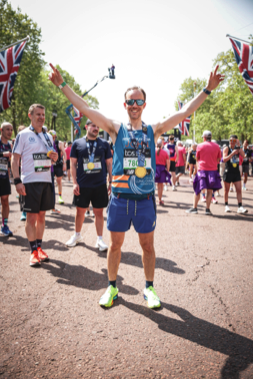
Why the Marathon?
John’s choice to run for the Roy Castle Lung Cancer Foundation was personal. Their work in research and patient support struck a chord, and having done some of their events before, John knew this was a challenge worth taking on.
With a fundraising target of £2,200, John and his wife (with her famous candles and bake sales) rallied the troops, and the local community got stuck in. By race day, they’d smashed it.
The Physio Who Knows Running Inside Out
John’s not just “a bloke who runs”. He’s our running gait analysis specialist at the clinic. That means he spends his days helping runners of all levels — from 'Couch to 5K' newbies to seasoned marathoners — run more efficiently and avoid injuries.
“Every niggle, every ache in training… I’ve been there. That’s why I’m so passionate about helping runners understand how their bodies move. A small tweak in your gait can save you a lot of grief down the line.”
The Training Struggle is Real
John’s marathon training hit 60 miles a week at its peak. That’s a lot of podcasts. He mixed in local races like the Rugeley 10 Mile and Stafford Half Marathon as practice runs.
But as any runner knows, training doesn’t always go to plan. A poorly timed cold threw a spanner in the works just weeks before London, forcing a tactical retreat and extra rest.
“Training plans are guides, not gospel. Your body needs time to adapt, and setbacks are part of the journey. It’s all about managing the load — same as I tell my clients.”
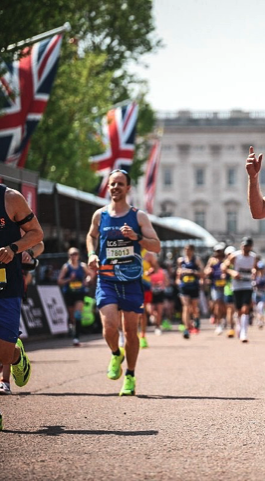
Marathon Day: Blood, Sweat & Cheers
Race day brought sunshine, sweat, and the electric buzz of 60,000 runners flooding London’s streets. Crowd support was unreal, especially at landmarks like Cutty Sark and Tower Bridge. A surreal highlight? Seeing Eliud Kipchoge fly past on the opposite side of the course.
But despite smart pacing and hydration, cramp hit hard in the final miles. Yet, John powered through, fuelled by the support of family, friends, and the thought of the charity he was running for.
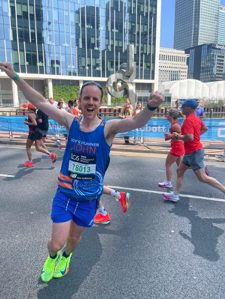
John Spots His Family at Mile 21
Crossing the Finish Line (and What Comes Next)
Turning past Buckingham Palace towards the finish was emotional. Months of training, sacrifice, and community support all leading to this moment. Relief, pride, exhaustion — all rolled into one.
But is John resting on his laurels now? Not likely.
“Chester Half Marathon’s up next, and then I’m chasing a new 5K PB. Running’s addictive like that.”
Could John Help Your Running?
If you’re a runner — whether you’re plodding your first 5K or chasing marathon glory — John’s your man. His gait analysis sessions can help you:
- Run more efficiently
- Reduce injury risk
- Recover better
- Enjoy running more
Because it’s not just about going faster. It’s about running smarter, staying pain-free, and making sure your body can cope with the miles.
Fancy a Chat About Your Running?
If John’s marathon story has got you thinking about your own running journey, why not book in for a gait analysis session? Whether you’re struggling with a niggle, want to improve your form, or simply want to avoid the common pitfalls, John’s been there, done that, and got the sweaty T-shirt.
And if you’d like to support his marathon fundraising (it’s still open), you can donate here:
Call us on 01889 881488 or click here to book your running gait analysis with John.
Hi, I’m John Hodgkiss, a full time physiotherapist working at Nicky Snazell’s Physiotherapy and Wellness Clinic. I specialise in running gait analysis and I have had the privilege to have helped many runners improve, from fellow running enthusiasts and friends right up to elite athletes.
Running for Roy Castles Lung Cancer Foundation
As many of you know, I’ve embarked on a thrilling journey to train for my first ‘live’ marathon, the 2025 London marathon, taking place on April 27th. Sadly, both my own family and my wife’s family have lost loved ones to cancer and I wanted to help in a way that I can, so committing to run the London Marathon was an obvious choice. Roy Castles Lung Cancer Foundation is a leading cancer charity and my aim is to raise £2,300 to help them.
Running a marathon successfully is heavily dependent on proper preparation and I wanted to take a moment to share my progress, challenges, and what I’ve learned so far. Whether you’re a seasoned runner or just curious about this incredible experience, I hope my updates will inspire you to lace up your trainers and hit the pavement (or trail)!
Week-by-Week Breakdown.
Start date: 6th January 2025
Week 1-4:
The Foundation
The first few weeks of training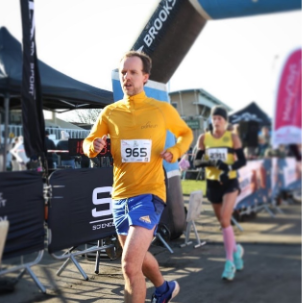 focused on building a solid foundation. My routine consisted of shorter, mostly conversational paced runs, slowly increasing my mileage each week. I incorporated a few harder runs and a couple of short strength workouts to enhance my overall fitness. I prefer to run on Cannock Chase but as London is a road race I started building in more miles on the pavements to start getting my body used to this. The biggest takeaway?
Consistency is key! Setting a schedule and sticking to it makes all the difference.
Week 5-8:
Building As I entered the next phase of training, I began to feel more comfortable with longer distances. I introduced a few more speed/ intervals during my mid-week runs to increase my pace. I also participated in a couple of local races, including the Rugeley 10 miler and Warwick half marathon, which were a great way to build my confidence and test my endurance. I raced wearing a running belt to practice carrying my own water and nutrition. My long runs on weekends gradually increased, peaking at 18.5 miles by the end of week 8. The feeling of completing those longer distances was invigorating and reassuring. On reflection, getting some races in early was a great way to connect with people, and they helped with setting realistic pace goals for the marathon.
Facing Challenges
It wasn’t all smooth sailing, though. During the Warwick Half I experienced some tightness in my left IT band and towards the end of the race I had some pain in my left knee whilst running a long downhill section, that made me fear that I was overtraining. After consulting with my colleagues, we figured out my glutes were simply getting tight and a bit of targeted massage and stretching seems to have cleared things up nicely.
Having made mistakes in the past I know the importance of listening to my body and adjusting my training accordingly, so I took it easier than planned for a few days following the race. Recovery became a priority, and I embraced the use of the foam roller, stretching, and taking time out to have proper rest days to allow my body to heal.
Nutrition and Hydration
From my experience over many years of running, I have realised how crucial nutrition and hydration are and I have certainly noticed the differences with marathon prep. I focus on a balanced diet rich in carbohydrates, proteins, and healthy fats.
I also find a protein rich post workout recovery shake helps speed up the repair, so I always take some calories on board straight after a run, within 30 minutes of finishing.
Meal prepping became a game-changer for maintaining my energy levels and ensuring I had the right fuel for long runs. I am also experimenting with different gels and hydration strategies during runs to discover what works best for my body. So far, I like a mix of SIS electrolyte and Maurten gels and salt sticks for extra electrolytes. Without this I would be prone to cramps and risk eventually hitting the wall!
Mental Preparation
Beyond the physical aspects,
I’ve found that mental preparation is equally vital. I started incorporating mindfulness techniques such as visualization and positive affirmations into my routine. During tough runs, I remind myself why I began this journey and that every mile brings me closer to the finish line.
Community Support
One of the most rewarding aspects of this training journey has been the community aspect. I’ve connected with fellow runners through local clubs and social media, receiving tips, encouragement, and even running partners for long runs. The camaraderie has been uplifting, reminding me that I’m not alone in this endeavour.
Upcoming Challenges
As I move into the final stretch of my training, I have a few key races and milestones ahead. My goal is to complete a 20-mile long run soon, and I’m excited (and slightly anxious) about it! I have to continue to build my weekly mileage up over the next few weeks, peaking around 65 miles, before starting to taper back to allow some recovery in the final weeks leading up to race day. I have my eyes set on a few events in the coming months, before and after London, and I can’t wait to cross that finish line and experience the buzz of the crowds lining the city streets.
Final Thoughts Training for a marathon is a rollercoaster ride of physical and emotional ups and downs.
With every mile, I learn a little more about resilience, determination, and celebrating small victories. With every marathoner I see in the clinic I gain another insight. I’m grateful for the support I’ve received so far and can’t wait to share the final outcome of this journey with all of you.
Thank you for following along on my marathon training progress! If you have any tips, advice, or stories of your own, I would love to hear them. Please email me at
johnh@painreliefclinic.co.uk
Here’s to the road ahead! Happy Running!
If you would like to help me reach my goal of raising £2,300 towards Roy Castles lung cancer charity, here is my link:
Vitamin D, often called the “sunshine vitamin,” is in the spotlight for its role in everything from our mood and immune system to bone strength. But, despite its name, it’s technically more of a hormone than a vitamin—our bodies produce it when exposed to sunlight. It’s been called a vitamin for so long that most of us stick with that name, even though it might not be entirely accurate.
Why Is Vitamin D So Important?
Vitamin D plays a crucial role in many processes throughout the body. It’s not just about keeping our bones strong—it actually enters the cells and can even switch certain genes on or off, affecting up to 5% of our genes. This ability helps regulate a lot of important functions, including immune responses. That’s why it’s so critical for maintaining good health.
The Role of Magnesium in Vitamin D's Effectiveness
But there’s a bit of a twist—vitamin D doesn’t work solo. It needs a supporting act, and that’s where magnesium comes in. Magnesium helps convert vitamin D into its active form, which is the one your body can actually use. Without enough magnesium, taking vitamin D might not give you the full benefits, no matter how high the dose. Think of magnesium as the key that unlocks vitamin D’s potential.
Magnesium is also crucial for balancing calcium levels, which is especially important when vitamin D is doing its job of helping you absorb calcium. If magnesium is lacking, you might end up with calcium building up in places it shouldn’t, like your blood vessels, rather than strengthening your bones where it’s needed most. So, magnesium and vitamin D really work best as a team to keep your bones strong and your body functioning properly.
Why Is Deficiency So Common?
Vitamin D deficiency is surprisingly common, even in advanced countries like the USA, where about 40% of adults are thought to be lacking. Globally, estimates range between 14% to 59%. One reason is that it’s hard to get enough from food alone. Sure, it’s present in fatty fish, egg yolks, mushrooms, and liver, but most of us don’t eat these in large enough quantities to make a difference.
The real challenge comes from geography. Vitamin D production depends on sunlight, so those of us living further from the equator—like in the UK—struggle to get enough in autumn and winter when the days are short and the sun is weak. A study from Switzerland showed that during spring and summer, just 4 to 6 minutes in the sun with 22% of your skin exposed can produce 400 IU of vitamin D. But in winter, you’d need around 6.5 hours for the same result! This explains why supplementation becomes so important during the darker months.
How Much Do We Need?
The UK government recommends a daily intake of 400 IU to maintain bone health. The NHS and the European Food Safety Authority set the upper safe limit at 4,000 IU. Dr. Rhonda Patrick, a medical researcher, points out that the right dose can vary depending on your size, weight, and existing levels of vitamin D. Some experts argue that we can handle much higher amounts—after all, on a hot day, your skin can produce up to 20,000 IU with enough sun exposure.
But there’s a catch: you can’t overdose on vitamin D from sunlight, as the body regulates its production. Problems can arise if you take too many supplements over a long time, which can lead to too much calcium in your blood. This condition, called hypercalcaemia, can weaken bones and damage the heart and kidneys. So, if you’re considering taking more than the standard dose, it’s always a good idea to consult your doctor and possibly get your levels checked.
Who Is Most at Risk?
Some groups are particularly at risk of vitamin D deficiency. As we get older, our skin produces less of a substance called 7DHC, which is key to making vitamin D from sunlight. This makes it even harder for older adults to get enough.
People with darker skin tones also face challenges because their skin naturally blocks more sunlight, which is great for avoiding sunburn but makes vitamin D production slower. This can be a real problem in places like the UK, where sunny days aren’t exactly common. Research during the initial phase of COVID-19 highlighted that darker-skinned individuals, including many NHS doctors who were among the first to die from the virus, were more likely to have low vitamin D levels.
Vitamin D and Immunity: Lessons from COVID-19
Vitamin D’s role in supporting the immune system became a hot topic during the pandemic. Studies showed that having enough vitamin D might reduce the severity of illnesses like COVID-19 by supporting T-cells—our body’s immune warriors. In fact, we sent out a blog on Vitamin D and COVID back in January 2021, and the results discussed at that time were eerily similar to the findings being discussed today.
For those who would like to revisit that blog, here is the link.
That blog also had a link to a video by Professor Roger Seheult, an American Medical Doctor. For the more technically minded its well worth watching.
Here are some of the key facts from the 2021 blog:
- A study of 14,000 COVID positive patients in Israel showed that low Vitamin D levels doubled the risk of hospitalisation
- A USA study of 191,000 patients COVID positivity rate showed a clear inverse relationship with Vitamin D level. The higher the Vitamin D, the lower the rate. This study also looked in detail at the rate by geography, race, age and sex and found that in every case the higher the Vitamin D level, the lower the rate.
- A study of 20 European countries looked at the number of cases and mortality of patients compared to the average Vitamin D levels in each country and found an inverse relationship. i.e. the higher the Vitamin D, the lower the number of cases and the lower the mortality.
A randomised controlled study of COVID positive patients who were given Vitamin D supplements, showed 2% went to ICU, compared to 50% from the placebo group. This study was only 76 patients and is going to be repeated with a larger population. - A French study of nursing home patients showed that those who were given 80,000 iu per 2 to 3 months had a much higher survival rate than those who hadn’t had any Vitamin D in the previous month.
Clearly a lot of studies suggested there was a strong correlation between Vitamin D levels and acute respiratory infections (ARI). Evidence showed that COVID cases, ICU and mortality were all inversely proportional to Vitamin D levels. That meant the higher your Vitamin D level, within limits, the lower your chances of getting COVID, needing ICU and it being fatal.
Dr. David Grimes, a consultant physician, notes that vitamin D helps the immune system respond more effectively, which could mean fewer infections and better recovery when we do get ill. It’s like giving your immune system a bit of extra strength when it needs it most.
Dr. Grimes also points out that in cases of serious deficiency, a single high dose of vitamin D might be used to boost levels quickly, but it can take a week before it becomes effective. This approach isn’t common in the UK, even though it’s used in countries like Spain and Italy.
Vitamin D, Magnesium, and Long-Term Health
The benefits of vitamin D extend beyond immunity. It’s crucial for mental health, with low levels linked to mood disorders like Seasonal Affective Disorder (SAD) and depression. It also plays a role in maintaining strong bones by helping the body absorb calcium. But remember, without enough magnesium, this process doesn’t work as well, and you might not be getting all the benefits of your vitamin D.
Magnesium is like the supporting player that makes sure the calcium ends up in your bones—not where it doesn’t belong, like soft tissues. That’s why some people choose to take a magnesium supplement along with vitamin D. And of course, eating magnesium-rich foods like leafy greens, nuts, and seeds can help keep everything in balance naturally.
There’s also some research exploring potential links between low vitamin D levels and conditions like multiple sclerosis (MS). MS is more common in countries further from the equator, where vitamin D deficiencies are common, suggesting there might be a connection. However, while we know that low vitamin D can increase the risk, there’s no clear evidence yet that higher levels can prevent MS.
How Can You Boost Your Vitamin D Levels?
If you’re in a sunny place, getting outside is the easiest way to boost your vitamin D. But let’s be honest—that’s not always an option in the UK. For many, a daily supplement is the best bet, especially in the winter months. Dr. Grimes suggests that finding the right dose means testing your levels first and then adjusting your intake.
Some people also take vitamin K2 alongside vitamin D to ensure that calcium goes to the right places, like bones, rather than tissues, where it could cause problems. It’s an extra step that can make a big difference, especially for those with concerns about heart health.
So, Should You Be Taking a Vitamin D Supplement?
You simply can’t get enough from food and that’s probably why in 2016 the UK government recommended everyone should take Vitamin D supplements. Probably, as we are all living somewhere with long winters and limited sun. But as with most things, balance is key. Too little vitamin D can lead to a range of health problems, but too much can cause issues as well. And don’t forget about magnesium—without it, your vitamin D might not be doing its job properly. If you’re unsure, chat with your doctor, especially before taking high doses. And when the sun does shine, take the opportunity to soak it up responsibly—your body will thank you for it.
We will be blogging on Vitamin K2 and it’s importance to take alongside Vitamin D in a blog in the near future. If you have found this blog interesting, then the K2 blog is likely to be just as much.
Olympic Bronze Medalist 1992 Barcelona
Women’s Health & MSK Physiotherapist

When I started working in the Staffordshire area I soon heard about Nicky Snazell and how she was an amazing holistic practitioner. That was me, a holistic physio who looked at people as a whole. I was intrigued. I wanted to find out a lot more about Nicky and her clinic.
Read on to follow Sandra’s story.
I was soul searching and thought why not just reach out to Nicky. She engaged with me immediately and I knew that the connection was there. The thought of having the opportunity to work in a clinic with such an amazing therapist as Nicky completely blew my mind!
On visiting the clinic and meeting Nicky and Alan face to face I thought I had come home. It was a perfect setting and felt like I had visited the clinic before, although of course I hadn't. All the staff were so welcoming and warming.
On watching Nicky treat some of her patients, I knew I had to work here. She treated patients completely differently to anything I’d witnessed before and it was clear that her dry needling skills were at an unbelievably high level.
Although I am bringing another skill to the clinic as a Women’s Health/ Pelvic Health physio, I do use acupuncture as a treatment modality on a daily basis and Nicky would be a phenomenal acupuncture and dry needling mentor! The training and education that she has shared worldwide is amazing and I wanted to have some of that, as part of her team, shared with me too.
I am naturally very competitive, always striving to be my best, never accepting the status quo. I thus have a strong need to learn and learn from the best, as only the best will do. That’s why joining the team at Nicky Snazell Clinic was so important to me.
"I am so glad to be welcomed on board. Thanks for having me, I am honoured."
If you are suffering with any pelvic floor problems, then you are not alone, as a third of women suffer with this at some point in their life. Don’t suffer unnecessarily. Help is at hand.

If you are in pain, we can help
or call 01889 881488
Jean, Erica & Charlotte will be happy to help
Women are not talking about their Pelvic Health enough. Perhaps it’s because they are too shy or too embarrassed to talk about it. Not discussing these openly can lead to a sense of isolation for those suffering with the symptoms of bladder or bowel incontinence, prolapse, sexual dysfunction or any other pelvic health condition.
Sadly, most people have no idea what Pelvic Health is and more importantly that real and effective help is available to women of all ages.
Read on to understand more about how a pelvic health specialist can help you.
If you have a sore knee, shoulder or back, you would probably have no hesitation to go to a therapist. If you can get yourself to think about Pelvic Health as just another type of problem that can be helped, then seeking that help will come naturally and without hesitation.
If you have a sore knee, shoulder or back, you would probably have no hesitation to go to a therapist. If you can get yourself to think about Pelvic Health as just another type of problem that can be helped, then seeking that help will come naturally and without hesitation.

Specialist pelvic health physiotherapy is probably not the first thought when people realise they need help because they start leaking with exercise (stress urinary incontinence), suffer vaginal prolapse or have an over active bladder. Yet there is robust evidence around pelvic health physiotherapy and it is recommended as the first line of treatment for a variety of pelvic health conditions. That’s why GP’s and Consultants refer to specialist pelvic health physiotherapists.
Even with such referrals, clients usually turn up and have no idea why they are here and how physio is going to help them. Thus, ever since qualifying in this specialism, I have been on a mission to educate and help make a difference to women’s lives.
We need to start to chat about bladders, bowels and vaginas and do this openly, without embarrassment. My main mission is to empower you to take control of your pelvic health as much as possible without the need for drugs or surgical intervention.
If you are suffering with any of these conditions, we can help. You can be confident that your concerns will be dealt with both sympathetically and confidentially.
If you are in pain, we can help
or call 01889 881488
Jean, Erica & Charlotte will be happy to help
There are various types of massage and often the most avoided is Deep Tissue, simply because the name is a bit scary and it sounds painful. But be under no illusion, Deep Tissue Massage opens pandora’s box to feeling in less pain, more flexible and healthier than you have in your life.
Find out more about how deep tissue massage can benefit you.
There are lots of different types of massage and each have their benefits and weaknesses.
Swedish
If we start with Swedish Massage, this is the softest variety and is wonderful for just wanting to feel pampered and relaxed. Therapeutcally, however, its benefits are marginal at best and what it does provide is short lived.
Sports Massage
This is a step up from Swedish and tends to be provided by therapists who are trained in human anatomy, so understand which muscles are most likely linked to a given problem, and can treat that accordingly. It’s generally a stronger type of treatment than Swedish and if the therapist is focussing on a localised problem, can cause pain that varies from uncomfortable to strong. There are two things to note here. First, resolving painful knots is obviously going to aggravate things and cause more short term pain but, and this is the kicker, the pain level will subside quickly as the problem is resolved in follow on massages.
Deep Tissue Massage
Sports massage can be highly effective in treating more superficial problems, but sometimes the techniques simply won’t get in far enough for deep seated problems. In such cases, the big guns need to brought out, so that the treatment can get in deep enough to be effective. At the same time, however, there are also relatively shallow problems that sports type massage could easily reach, but the added pressure used in deep tissue massage is way more effective.
That effectiveness, however, does come with more pain - for the first few treatments that is. Yes, it’s a bit of ‘no pain, no gain’, but for those willing to accept this, the gains are substantially greater and once gained, most are reluctant to lose them again. Put simply, a body regularly treated with deep tissue massage, will feel at a level above it has ever felt before.
(Interesting fact- In Germany, Doctors often prescribe a course of Deep Tissue Massage in preference to drugs as their first line of defence. Now why would they do that unless it really works?)
Emotional pain likes to hide out deep in the body, deep in a pit, so much so, it’s like an archaeological dig to find it. Such pain is caused throughout our life whenever our body experiences emotional trauma, responding by going tense, our fight or flight response. This shuts down oxygen to some muscles and viscera and that’s usually a time of intense anger or fear. Emotional notes, as well as physical pain are a physical manifestation of what our emotions are at that time, and unfortunately can become imprinted within our bodies and reside there, the cause long forgotten, locked in for years like unexploded land mines.
A deep tissue therapist can then unwittingly come along in search of deep tissue trigger points, the aim being to release physical pain and tension, only to be bombarded by a huge emotional release as the land mine explodes.
The good news is that this release is a vital step to a long term resolution of pain.
The deep trigger points can be treated with deep tissue massage, applying focussed pressure, encouraging the muscles and fascial tissue to relax, releasing toxins and improving oxygen flow. The latter is important as restricting the oxygen supply can upset the nerves and cause chronic super sensitivity within those nerves. The result of this is the birth of chronic painthat won’t ever go away.
When we release these trigger points, you must understand there is a lot of emotional baggage that can go with it. It thus helps if your therapist can also work with a healing ability and so heal the emotion as it erupts.
This why deep tissue massage is such a wonderful treatment, alongside deep seated physical release, you have a treatment for mental wellbeing.
In some situations, curing a deep seated, stubborn pain might need a finely focussed deep needling technique called GunnIMS, and in this we are blessed by having one of the very top practitioners in the UK at our clinic.
If this is something that calls to you, pick up the phone and let’s chat.
If you are in pain, we can help
or call 01889 881488
Jean, Erica & Charlotte will be happy to help
It’s all too easy to choose the first clinic you see listed or hear about. After all, they must surely all be same and it will save me a whole lot of time if I stick with this one, won’t it? Well, no, actually it won’t, any more than searching for a car with four wheels would be fine when you get offered a Ferrari and a Rolls Royce while you were thinking of something more like a Mini. Even a simple bit of refinement of your search, like ‘small 2 door car that can do at least 50 mpg’ would cut the list down massively.
Ok, this is a very simple example and one where most people are going to have a fairly good idea of what they want and don’t want.
But if you have never been to a private therapy clinic before, it’s not going to be so easy because you don’t have any idea of what you need to ask to help get you to the right place and more importantly stop you wasting your time or money on the wrong place.
Read on find out the three questions you must get answered before you make your choice.
The questions need to be for any clinic you consider, but we will answer them here for our clinic so that you get an appreciation of how expansive the questions are.
What should you need to find out first?
1. Can they help you by fixing your problem?
2. Do they have the expertise to sort out your particular problem? Can you trust them to do this?
3. Do they offer good value?
So firstly, can we help you?
Well, let’s start first with our name, ‘Nicky Snazell’s Wellness and Physiotherapy Clinic’. That actually tells you three things.
1. It’s a Physiotherapy Clinic. There are different types of physiotherapy specialism and our clinic focusses on your musculoskeletal frame, your joints, your spine, the nerves, muscles, tendons and ligaments that supply those joints, referred to as MSK Physiotherapy.
If you have a problem with any of those parts, anywhere in your body, from head to toe, then that we can help sort. Your problem may have resulted from a sports injury or from a simple trip, a major fall or just be part of having seen too many summers. If you are in pain or have restricted flexibility, we can help.
2. It’s a Wellness Clinic. Now there’s a good chance this will cause confusion because the term ‘wellness’ is so liberally and often misleadingly claimed. We haven’t got to ‘wellness rubbish collectors’ yet, but you get my drift.
Wellness to us has a very deep meaning of taking account of a clients’ inner health and not just their physical problem. For example, all too often there is a clear link between mind and body, yet this is overlooked.
Nicky Snazell (more on her shortly) after years of research, developed her own wellness criteria, looking for those conditions which would have an impact on both the problem itself and the best route to treat it. Her wellness model takes into account four key factors of lifestyle, mindset, fitness and diet, each scored on a simple traffic light basis of red, orange and green. What she found was that two clients, presenting with almost identical problems, but one with four red keys and the other with four green keys, needed very different treatments for success. In fact, a treatment which helped the four green key holder was contraindicated for the four red key holder. Without a deep understanding of wellness, this important differentiation could be completely missed, resulting in a client getting the wrong treatment, and apart from being painful, will potentially waste a lot of time and money.
3. The clinic has the owners name above the door. That’s a stamp of authority and recognition within her peer group. To you, a potential client, that means trust and confidence. Just as Rolls Royce won’t compromise their name with anything but the best, ‘Nicky Snazell’ over the door means no different.
It’s a personal reputation and it took many years to gain. In Nicky’s case after setting up Physiotherapy departments in both the NHS and private sectors, she started her own clinic and won the approval of several Consultant Surgeons who chose to consult at her clinic.
Nicky has written five books on Physiotherapy and Health, is currently writing her sixth, has consulted in Harley Street and been invited by over 30 radio stations across the USA to provide expert opinion on ways to help the opiate crisis without drugs. She has won awards from the UK based AACP, been a speaker at their conferences, presented on health internationally and awarded the first fellowship in the world to ISTOP, by it’s founder Professor Chan Gunn. Perhaps of most significance to you though is that many clients have travelled not only from every corner of the UK to seek Nicky’s help, but also from thousands of miles away from different countries and continents.
All of the above took dedication and years of hard work. Her stamp over the door of her clinic is her commitment to any client who enters the door that they will be provided the best treatment possible.
If you find another clinic with the owners name over the door, you know that the owner is similarly putting their reputation on the line and you should take confidence from this.
A great indicator of how much trust you can put in us is to ask others. Google reviews provide exactly that. Personally, I wouldn’t go near anyone, in any business, with a score below four out of five. Also, make sure a clinic has a lot of reviews before giving the score too much credence. The fact is everyone has a few friends to put in a nice word. Very few have hundreds. We have over 150 and our score is 4.9. Put another way, over 90% of our clients rate us 5 stars.
Second, do we have the expertise to help you with your particular problem?
It’s one thing to determine if a potential clinic can most likely help you. It’s another thing to establish if that clinic has the expertise and resource to help your specific problem.
There are perhaps the more obvious questions to ask such as ‘how many years’ experience do you have’ and ’have you treated this problem before’. Larger clinics will have more therapists and there will be a range of experience and different specialisms, thus one therapist could be much more suitable to you than others.
Now a completely different aspect of any clinic comes to the forefront. Does the clinic have a knowledgeable reception team who can determine who is going to be the best fit to your problem. Let’s face it, without this kind of help, your chances of doing the same are slim to none. It’s much better to be able to talk to a knowledgeable person up front. There are subtleties in here that only by talking do you get them resolved. For example, you might be very motivated by preventative help, so it would be better for you if your therapist thought the same way.
Another factor, most likely something that you would not have even thought of, yet very important, is the amount of in-house training, called CPD, that takes place. The benefits of this to you should be obvious – a team that constantly cross trains learns faster, broader and deeper.
You might then be surprised that many clinics don’t do this at all, it’s just hands to the pump treating clients.
Nicky Snazell, who has a strong drive to constantly learn and be ahead of the curve, makes sure that ongoing CPD is an integral part of her teams activity and CPD is a weekly event for every therapist.
One final factor which will make a lot of difference to your treatment success is how well equipped the clinic is. Nowadays there is a plethora of sophisticated equipment which can help a lot but that takes huge investment, which is why many clinics have very limited technology support.
At our clinic, constantly investing in new technology has always been part of our philosophy and on more than one occasion we have pioneered new technology. The real bonus to you, however, is that all this technology is made available to you at no extra cost. Make sure you ask the cost of technology with any clinic you may consider.
Third Question. Do we offer good value?
The answer to that question is very much dependent on what you value the most. For the majority, we find that clients want to be able to get on with their lives, doing what they love doing, whether it be enjoying sports, gardening, playing with the grandkids or just continuing to be able to positively contribute to society. Being in pain stops all of this, your life stops, and the value of your life falls off a cliff.
Poor health choices in the long term can lead to a permanently restricted lifestyle, a dependency on toxic drugs and maybe even surgery.
What value then to find a clinic that can provide a broad range of skills, a pioneering attitude to knowledge and technology introduction, a desire to provide proactive help to keep chronic pain at bay? Only you can make that decision based on your values.
Our clients are like family, and they feel confident and safe the moment they first walk through our door. Many want to pass the message on so that we may help others and we in return offer half price treatment for referring (rules apply) and we have a loyalty scheme that our clients love. When you add access to all our range of technology at no extra cost, and the very high level of skill and knowledge on site, plus these great ways to save on treatment cost, then value from us shifts massively in your favour.
Three questions you should have answered before you make your choice. Not easy to answer simply, as they provoke many considerations that need to be answered. This emphasises, however, the importance of getting it right to avoid wasting time and money, but most important of all the negative impact it will have on your life.
If you feel we might be a good fit for you and simply would like to know more, then give us a call. We have a very friendly team, Jean, Erica and Charlotte, who are there to help.