
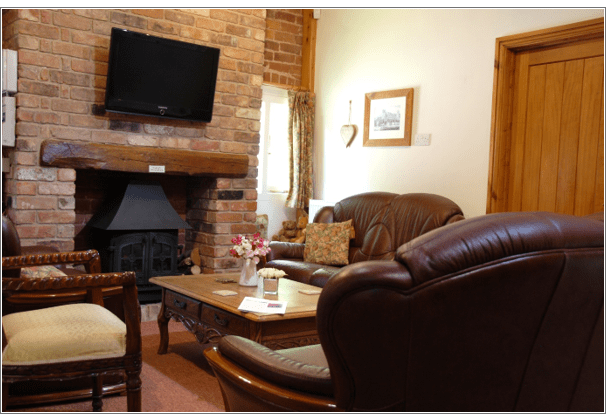
Following the recent government announcement of the relaxation of many COVID restrictions, we have returned the clinic waiting room to its former soft, relaxing ambience, with sofas surrounding the fire. We have also opened access to the coffee machine, with which you can make latte, cappuccino, white or black coffee, straight from freshly ground beans. Tea and water are also available. (Biscuits are on the way as well!)
Governing Body Guidelines Prevail
Despite what the government says, however, we still have to work to strict governing body guidelines, which means our therapists will continue to wear face masks. Although we can no longer require you to wear a mask while in the clinic, we do ask you to do so to help protect the staff, and ultimately yourself.
In addition, we still need to control numbers of clients in the waiting room and thus request that you remain in your car until your allotted treatment start time. New clients will need to come in a few minutes before ( 5 minutes maximum) to complete new client paperwork.
We will also continue to sanitise rooms between appointments, which will mean a slight shortening of appointment time.
Improved Starting On Time Service
One change we did make because of the pandemic was to introduce gaps for all therapists regularly throughout the day. This was primarily to provide some relief for the therapists from working in the antisocial restrictions of full PPE. The good news for you is that we are going to continue to schedule our days with regular breaks because it has dramatically improved our ability to start your treatment on time.
A modern day problem for so many of us is the feeling of being permanently tired and exhausted. We go to bed earlier but still wake up the next morning feeling like it’s the middle of the night and just want to go back to sleep.
A lot of this can simply be due to fact of the world we live in, a world where stimuli are available 24/7. Our bodies, however, were designed to operate not in this new world, but in a more simple way, where day and night were part of a daily rhythm of living. This day / night cycle is called the circadian rhythm.
Most of our body processes are tied to these circadian rhythms, whether it be when we eat or sleep, when we digest and rebuild healthy cells and so on. It is not surprising then that if we interfere with these natural body rhythms by imposing artificial stimuli ‘out of normal rhythm’, our bodies will react negatively.
Thus, it makes sense to reduce and where possible eliminate these interferences where possible and let our bodies internal body clock work as it was designed. Here are some suggestions:
- Weekends are not times to stay up late and sleep in. Go to bed and get up at the same time every day of the week.
- Fasting at night is normal, that’s why we break the fast every morning. Fasting lets your body work better at fighting viruses and disease and healing itself overnight. Have your evening meal at least 3 hours before going to bed and don’t snack or you lose the benefits of fasting.
- Day time is designed to be a time when you are outside, getting the benefits of direct sunlight which allows your body to produce Vitamin D, important for fighting inflammation.
- Night time is meant for rest and sleep. Extending the day with artificial lighting, and worse, exposing yourself to the blue light emitted by TV’s and mobile devices, needs to be minimised. Try to eliminate blue light exposure at least an hour before going to bed.
- Caffeine consumption has been shown to interfere with the body clock and with excessive consumption can cause many sleep problems. It is recommended you stop taking caffeine 4 to 6 hours before bedtime.
For more on general health, I recommend you visit www.bluezones.com
For more on the rhythm method click here
Any of us can suffer flare ups from time to time. A swollen knee or ankle maybe. A flare up is an internal activity, something has caused your body to react this way. I get asked several times a week about what would be best to do and not to do, to help get the inflammation down as quickly as possible.
There will many of you who I haven’t seen for a while who also suffer these occasional flare ups, so to help you as well, I’ve created a simple list of top tips and provided an insightful look into the benefits of fasting.
Foods to Avoid
- Sugar
- Processed diary
- Alcohol
- Processed snacks
- Gluten
Food that helps
- Vegetables provide anti-oxidants which means they fight oxidation, free radicals and inflammation
- Also provides prebiotics for a healthier gut
- Eat 6 to 11 servings a day
- Drink more water
Fasting for Health & Longevity
This one may surprise you but please read on
Yoshinori Ohsumi, the 2016 Nobel prize Winner in Medicine, opened up a completely new field of science studying autophagy. It’s likely that you have never heard of autophagy and that does not matter. What matters is that mutations in human autophagy genes can cause disease. Ohsumi’s research over the last 40 years has shown that autophagy helps protect against inflammation and in diseases like dementia and Parkinsons. The perceived benefits of autophagy are so wide that there are more than 5,000 published studies a year across many fields of interest, including cancer and longevity.
So what is autophagy?
Our bodies rely on a steady energy source from the food we eat. During fasting or starvation, this energy source is switched off and this causes the body the switch energy production to breaking down protein in existing cells. Simply put, autophagy is a process of using energy stored in the body.
More importantly, while in this state of fasting,
our cells destroy viruses and bacteria and eliminate damaged structures.
How Long Do You Have To Fast To Gain Benefits?
It’s not as bad as you might think, so don’t think this is not for you. A large body of research has shown that fasting for just 12 or more hours a day triggers autophagy. Now think about it, you fast every day anyway, that’s why you break your fast every morning. If you had your last meal at 6 pm and then breakfast at 8 am, that would be a 14 hour fast, more than enough for you to get the benefits of autophagy.
Clearly the trick is to make sure you have your evening meal early and no snacking after that. That’s tough for a lot of us, but let’s be honest, its only a habit anyway and habits are easy to break when you are determined.
Here is your reason to be determined.
A large amount of research into autophagy has shown a clear link to reduced inflammation, weight loss, improved brain function and better blood sugar control, the latter being directly linked to diabetes. Studies with Rhesus Monkeys eating only 70% of their normal calorific intake have been shown to live much longer and to be much healthier in old age. Without doubt the huge amount of ongoing studies are only going to expand this list of benefits.
For more on health in general, I recommend you visit www.bluezones.com
For more on autophagy click here
MRI’s often show tissue damage to spinal discs, muscles, cartilage and tendons when no pain is felt.
Now at first glance the above statement might seem woefully wrong or at the very least illogical and confusing. However, it’s true. Understanding your pain more now will improve your quality life both now and into your old age.
Pain can be due to a recent injury or it can be a consequence of aging. Tissues wear with use and time. Thus a footballer is likely to put a lot of wear on his or her knees and is much more likely to suffer arthritic pain, due to heavy loss of the smooth cartilage on the bone ends. But not always.
We have seen scans of knee joints where there is full bone on bone contact with little pain. Yes, a bit of stiffness first thing in the morning or after being stationary for a while, but little pain. In fact, 50% of MRI scans show moderate cartilage loss and yet with zero pain. On the other hand we have witnessed extreme suffering where there was quite a lot of cartilage still intact and functioning.
However, having a scan can help indicate the most appropriate treatment protocol. For example, we had a patient with a destroyed knee joint, but only felt mild discomfort. This indicated that a gentle rehab prescription, plus a change of lifestyle were needed for longevity of the joint.
This modern ability to provide a detailed internal scan can be a cause of pain, as it depends on what is said to the patient to explain the results, as well as how that patient interprets what has been said. The mind is very powerful and can act to ignore pain signals or magnify them.
These scans can also act to promote the need for replacement surgery because an individual may interpret moderate arthritis as a need for replacement, even though the level of pain is low. Further to surgery, research has shown in certain individuals, the brain magnifies the pain post operatively.
Is it the same for all parts of the body?
The simple answer is yes. It doesn’t matter where the problem is, whether it’s in the neck, shoulder, back or hips, there is little correlation between the injury and the level of pain being felt.
- Only 10% of people found having a neck disc bulge suffered pain. 90% had no pain
- The majority of those with disc changes in the lower back suffer no pain
- More than 33% of people over 30 and more than 67% of people over 70 have abnormal MRI findings in the shoulder and suffer no pain
- More than 73% of those found to have abnormalities in the hip had no pain
What is pain & why do we feel it?
Pain is an important signal that warns us something is wrong. For example, lumbar pain might occur because of a trapped nerve, and movement in a certain way causes pain. Thus, we are getting a warning that there is a problem and that certain postures or movements should be avoided so as to give the injury a chance to heal.
Pain signals are sent from the body and then up the spine into the brain. The brain decides how much pain will be felt based on this signal plus many other factors:
- Emotion
- Diet
- Lifestyle
- Fitness
- Health
- Genetic inheritance
Brain chemistry and thus how signals are fired in the brain are dependent on what you eat.
An MRI scan can’t see any of these factors and this is why it is so important to get a multi disciplinary approach to how you should be treated.
Ref: ‘Wrinkles On The Inside’ Flynn, T; Heafner, J; Hall J. Amazon UK
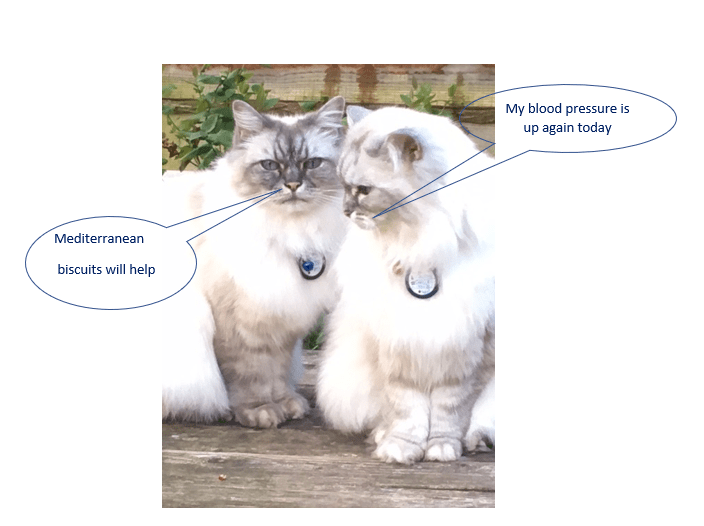
Our cats are in their twilight years and they are suffering arthritis and all the others problems of old age. Vet visits are getting more frequent as we want to make sure they can enjoy the remainder of their lives as much as possible and with as little pain as possible.
At a recent visit the vet asked us to start giving the cats some olive oil every day, in this case to help their gut. Alan was already taking a spoonful every day, so it prompted us write about it. Hopefully you will read on and maybe it can help you.
Olive oil is extracted from olives and consists of both saturated fat and polyunsaturated fat. The main fatty acid is oleic acid, making up about three quarters of the oil volume.
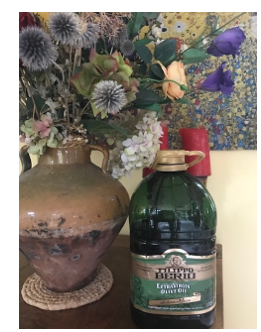
Most of us will have heard about the benefits of the Mediterranean diet rich in olive oil and its healing properties. Large scale studies have supported this view. For example a study of 841,000 people found that olive oil was the only monounsaturated fat associated with a reduced risk of stroke and heart disease. In another review with 140,000 participants, those who had olive oil were at much lower risk of stroke than those who didn’t.
Studies suggest that this oleic acid reduces inflammation, notably in C-Reactive Protein, an important inflammatory marker. Oleic acid contains vitamins E and K and biologically active anti-aging antioxidants. Chronic inflammation is thought to be a leading driver of many diseases, including heart disease from high cholesterol, stroke, arthritis, cancer, type 2 diabetes, obesity, rheumatoid arthritis and Alzheimer’s. Such problems led to extensive research on the role of olive oil in the Mediterranean diet.
Diabetes Type II
Several studies have linked olive oil to beneficial effects on blood sugar, insulin sensitivity and type 2 diabetes. A randomised clinical study of 418 healthy people recently confirmed the protective effects of olive oil, where a Mediterranean diet rich in olive oil reduced the risk of diabetes by over 40%.
Alzheimer’s
Alzheimer’s disease is a common neurodegenerative condition which leads to the build up of so called beta-amyloid plaques inside the brain cells. One study on mice showed that olive oil can remove these plaques.
A human study indicated that a Mediterranean diet rich in olive oil benefitted brain function.
Heart Disease
Olive oil helps to protect against heart disease in several ways. It lowers inflammation, protects “bad” LDL cholesterol from oxidation, improves the lining of your blood vessels and may help prevent excessive blood clotting.
High blood pressure, which is one of the strongest risk factors for heart disease and premature death. Interestingly, olive oil has also been shown to lower blood pressure. In one study, olive oil reduced the need for blood pressure medication by 48%.
Cancer
Mediterranean countries with olive oil rich diets have a lower risk of some cancers and many researchers believe olive oil may be the reason, but there has been no concrete research as yet to support this. The anti-oxidants in olive oil can reduce oxidative damage due to free radicals, which is believed to be a leading driver of cancer. Many test tube studies have demonstrated that compounds in olive oil can attack cancer cells.
Rheumatoid Arthritis
Rheumatoid Arthritis is an autoimmune disease characterised by deformed and painful joints. It involves the immune system attacking normal cells by mistake. Olive oil supplements appear to improve inflammatory markers and reduce oxidative stress in individuals with Rheumatoid Arthritis.
One study of people with Rheumatoid Arthritis, in which olive oil was combined with fish oil, showed a significant improvement in hand strength, joint pain and morning stiffness.
Harmful Bacteria
A harmful bacterium Helicobacter Pylori lives in your stomach and can cause both stomach ulcers and stomach cancer. Test tube studies have shown that extra virgin olive oil fights eight strains of this bacterium, three of which are resistant to antibiotics. A study showed that 30 grams of extra virgin olive oil taken daily, can eliminate Helicobacter Pylori infection in 10% to 40% of people in as little as two weeks.
COVID Fallout
We have a big fight on our hands to reduce inflammation in COVID victims. Natural remedies such as olive oil might have a role to play.
Summary
There have been far too many examples that show some form of benefit to ignore in taking olive oil every day. It’s not some form of miracle cure, no such thing exists. But the smart money would be to add it to your daily diet.
References are available on request for those who wish to delve deeper.
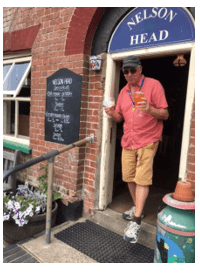
We decided to head to the beaches of the Norfolk Coast for the Bank holiday weekend as it looked like the weather there was going to be better than home. Before COVID (remember those days?) one thing we thoroughly enjoyed was a 5 mile walk up the beach to a remote pub called the Nelsons Head. We would sit outside soaking up the total peace of the environment, with nothing more than bird song to break the silence.
It was a lovely warm day, so we decided to renew our pilgrimage and set off along the beach, stopping for a while to watch hundreds of adult seals sunbathe, while their pups played in the surf. Our enthusiasm got us to the pub and we sat happily for a couple of hours in the sun with drinks and food. Little did we know our problems were only just beginning, as our muscles and joints started complaining.

The return journey was hard, it felt like walking up hill, against the wind and in deep sand. (phew, I nearly wrote something else). Nicky had had knee surgery in her twenties, which didn’t go well, and she was told her knee would be shot by her mid thirties, which would be way too young for a replacement, so she should expect quite a few years of pain and lack of mobility. Its only been Nicky’s determination to constantly exercise and keep her leg muscles strong that has kept these wolves away.
The problem is our recent exercise preference has been cycling on the Chase, which is good, but not great preparation for 10 miles of walking in the sand. Her knee locked up and walking became this wooden leg hop along, which aggravated her hip. I’m sure if we had been doing our Lawrence of Arabia bit in a desert, we would have walked in circles. Eventually we made it back, though, two very tired people.
In Nicky’s case, her knee problem, although largely man made, is controllable with the right preparation.
The knee joint is one of the largest and most complex joints in the body. It’s heavily stressed and a lot can go wrong. If you would like to know more about knees, then read on. It’s important to note that the level of pain you feel, or lack of mobility you suffer, is not directly linked to the severity of the problem
Anatomy
The knee is one of the largest and most complex joints in the body. It sits between the thigh (femur) and shin bone (tibia) and lateral small bone (fibula). The knee cap (patella) sits on the front. The bone ends are covered in shock absorbing cartilage, which wears with age and use.
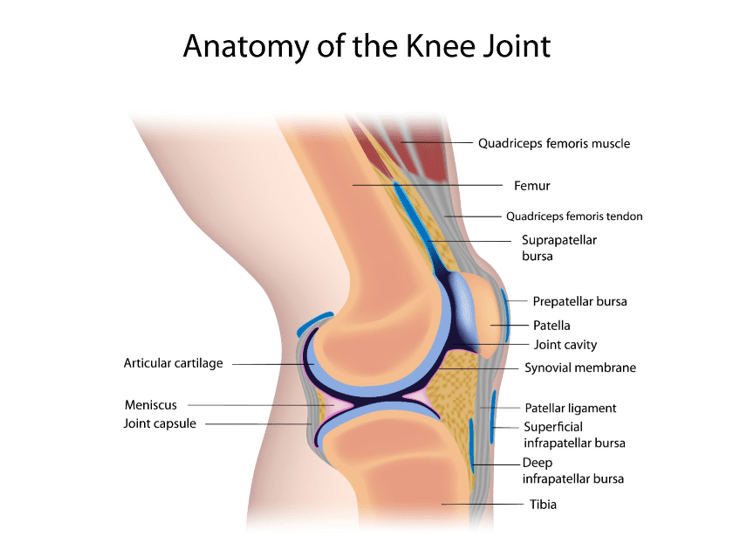
The knee acts as a hinge and is responsible for both movement and weight bearing, and being one of the most stressed joints in the body, is prone to injury. The joint consists of menisci, ligaments, tendons and bones.
There are two meniscus, crescent shaped discs that act as shock absorbers and help spread the load across the top of the shin bone (tibia). The knee has four strong ligaments which act to stabilise, two cruciate in the centre of the joint and one on either side. Tendons are tough bands of tissue which connect muscles to the bones. Although not technically part of the knee, the quads and hamstrings muscles in the thigh are important to strengthen and help flex the joint.
Common Problems
There are many potential problems with knees, ranging from serious that require surgery to others than need conservative treatment. Knees are most often injured during sports activities, exercising or due to a fall.
In athletes the most common acute injuries are to the cruciate ligaments, which usually occurs where the knee experiences a sudden twisting motion, a rapid change of direction, or a bad landing from a jump. Meniscal tears, lateral ligament tears, muscle tears and tendon strains are also common.
Osteoarthritis is a major cause of knee pain and is related to age, lifestyle, job, and especially for knees, and weight.
Overuse and age can cause problems with folds in the sheath (plica), inflammation of tendons (tendinitis) and inflammation of bursas (bursitis).
How do I know if my knee pain is serious?
Signs of being serious are
- Heard an audible crack
- Feels unstable
- You can’t weight bear
- Very swollen & painful
For example, conditions such as a dislocated knee are serious, causing substantial damage to tissues, blood vessels and nerves, plus complete tearing of cruciate ligaments. Urgent medical attention may be required.
Self Help
Due to the many possible causes of knee injury, there are limited options for self help. Stopping the activity or sport which resulted in the injury, avoiding weight bearing, applying cool packs and elevate if swollen, taking pain killers and anti-inflammatories are all temporary options until a qualified diagnosis is available.
Treatment Options
The large number and broad range of causes of knee injury and pain, means that there are an equally broad range of treatment options and can include specific manipulation techniques, radial shockwave, pulsed shortwave, electro-acupuncture, exercise prescription and lifestyle advice. Most important is to get a qualified diagnosis as soon as possible and this may require X-ray or MRI scanning to clarify.
Every now and then you come across something so amazing it makes you question your own beliefs about what is possible in life. Most of us set limits on ourselves that restrict what we believe is possible and guess what that’s what usually happens
We achieve far less than we could have without self inflicted limitations
I’m going to set you a theoretical target. You decide if it’s realistic or just plain daft.
You have to single handily transform a barren wasteland, twice the size of Central Park in New York, into a lush forest fit for elephants, tigers, deer and lots of other wild life.
Oh, one last thing. By hand, no equipment.
When you have made your decision, read on…………………………………
Ok be honest. You thought about if for a second or two and decided it fell into the ‘mission impossible category. Even Tom Cruise couldn’t do that you thought. Great no change, keep the bar low.
Why? Well to most of us it would seem impossible to do. So you would set your sights a bit lower, say transform your overgrown back garden into a nicely laid out area with some grass, flower beds and a couple of trees. Now this in itself is not a bad achievement. But how much more might you have achieved if you had set your goals higher.
How high could you have gone?
Go get your self a drink, sit back and watch what one man achieved. Be inspired and reset your goals higher.
When you are in pain, it dominates your thoughts. All you want to do is get out pain and fast.
The problem is that pain is a complex issue and there are usually no simple solutions
There are many factors which could affect the level of pain you feel and some of these factors may at first surprise you as they are not part of our normal conversation. Our modern day approach to dealing with pain usually starts and ends with drugs.
Most of us know, however, that there are serious consequences to long term use of drugs, and these consequences get more serious as more powerful drugs are prescribed. In fact, prescribed opioids are addictive and are responsible for creating a lot of addicts.
Further, opioids are now recognised as being ineffective in treating chronic pain.
No doubt, many questions are probably now in your mind:
- What is pain?
- What’s the difference between acute and chronic pain?
- Why am I in pain?
- Who should I see?
- Who can I trust?
- What can I do myself?
If you were armed with answers to these questions, you would probably feel a lot more confident and certainly much better armed to make better decisions to deal with your pain.
We have thus created a brand new ‘Pain Escape Plan’ that aims to answer these questions and put you on a pathway to better long term health and reduced risk to future pain.
Your free plan is here.
p.s. If you have friends or family who are in pain, then please forward this blog to them. You might save them from weeks, months or even years of unnecessary pain.
For those of you who have had a serious pain problem and needed an MRI to help diagnose the problem, you will know that getting an MRI through the NHS can be somewhere between difficult and impossible. Even when approved, it can then take weeks to get the scan and then weeks to get the results.
For some, this situation is just not acceptable and then the only option is to go private
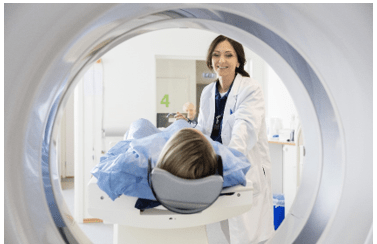
We have been able to provide a private MRI for many years through Alliance Medical at Cannock, who provide excellent service and normally complete the scan and report within 1 week.
Both their scanning technology and quality of reporting is excellent. It’s also very cost effective with single scans starting at just £249.
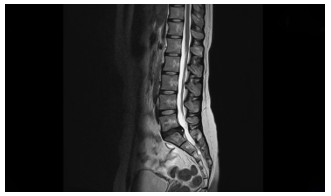
If you feel you need an MRI scan to help diagnose your problem, please call us. We can help.
Call 01889 881488 NOW. Erica & Jean will be happy to help.
Possibly? But At No Extra Charge From Us!
Radial Shockwave seems to be the in thing at the moment, with increasing numbers of clients calling to ask if it might help their condition.
For those of you who have not heard of radial shockwave, here is a brief summary.
The technology is far from new, having been developed, it is reported, from observations in WWII, where troops were injured and sometimes killed by the shockwaves resulting from near miss explosions.
Since then, the use of shockwave as a treatment has been researched, developed and used much more in mainland Europe than the UK. Thus the UK came to the party many years after it was firmly established in the rest of Europe, but it is now common here.
What Conditions Can Radial Shockwave Treat?
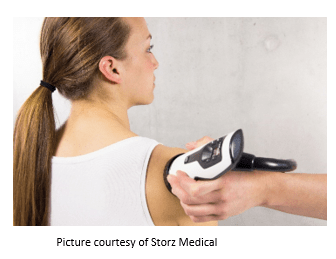
We use radial shockwave to help treat many conditions, ranging from tennis elbow, to low back pain, Achilles tendonitis, ligament damage, fascial tightness, frozen shoulder, calcified tendonitis, heel spurs and plantar fasciitis (policeman’s foot). In short, it has benefits for treating much of the body.
Is It Expensive?
The answer to that is it depends where you go for treatment. We were one of the first clinics in the country to provide radial shockwave treatment and we went to Europe for training to make sure we were providing well informed treatment. We have since invested in no less than four radial shockwave machines. So we have vast experience in using radial shockwave.
We Were SHOCKED when we found out how much other clinics charge for shockwave
Last week we bought our fourth radial shockwave and in discussion with the company we were informed that most clinics in the UK only have one machine, rarely does a clinic have two. This didn’t surprise us but we were shocked when we were told that the average charge outside of London for a single shockwave treatment was £60 to £100. Inside London it was monopoly money.
We don’t charge extra for shockwave.
Our philosophy is to provide the very best treatment we can and all our therapists have access to all our technology, including radial shockwave and all of this technology is available at no extra cost to you.
What is Shockwave?
There are two types of shockwave technology, radial and focussed, with by far the majority in use being radial.
Focussed shockwave uses a focussing lens, similar in concept to a car headlight, which brings the sound waves together at a specific depth. Focussed shockwave is used to break up kidney stones, deep within the body. Accurate depth control is important and usually requires scanning technology. It’s not the best tool for treating many MSK problems.
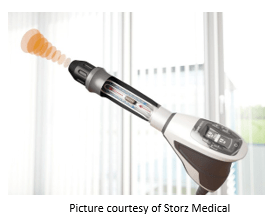
Radial shockwave uses a gun type device, where a bullet is fired and hits a metal endpiece which in turn is pressed on the body. In this way the energy of the bullet is transferred into the body as an intense sound wave, which diverges once in the body. Typically, the maximum effective depth is 30mm, as by then the wave is widely dispersed.
Most radial shockwave equipment uses compressed air to provide energy to the gun and more recently, all electric guns have gained popularity, being lighter and more mobile.
What Should You Do?
Radial shockwave is now readily available across the UK, so you have plenty of choice. Bear in mind that radial shockwave is not the answer to every problem and we consider it just one of the tools in our toolbox. Just as you wouldn’t try to take a screw out with a hammer, we wouldn’t use radial shockwave for certain conditions.
Ultimately, the skill and knowledge of the therapist is far more important than any one piece of equipment and for our part, we are confident that we have a very strong team of knowledgeable therapists. Our knowledge and commitment to radial shockwave is probably as good as anybody in the UK.
More importantly, we won’t charge you an arm and a leg for an in vogue treatment. In fact, we won’t charge you anything extra at all.
If you are in pain, we can help.
Call 01889 881488 Now. Erica & Jean will be happy to help