
Physiotherapy – A Brief History
The beginnings of Physiotherapy date back to the late 1894 when four nurses formed the Society of Trained Masseuses. A Royal Charter was awarded in 1920, in recognition of the profession’s high education and professional standards. It evolved over the following years until it became the Chartered Society of Physiotherapy (CSP) in 1944.
The CSP has been the controlling body for physiotherapy since 1944 and they work to the guidelines as dictated by NICE (The National Institute for Health & Care Excellence – a government body). The CSP is predominantly geared towards the needs of the NHS and this is where the great divide has it’s origins.
Physiotherapy Within The NHS Today
The NHS is a massive entity and has to constantly make difficult decisions on how and where to best spend the budget it is provided by the government. The lack of a sufficient budget has been a permanent factor in our lifetime, and as we all know, it is without fail subject to political football every election.
In recent years the NHS has moved towards ‘hand off’ physiotherapy. You will get a good diagnostic assessment if a face to face appointment is granted. However, hands-off exercises seems to be the normal ‘treatment’. Follow up appointments, if really needed, are 15 to 20 minutes and are spaced 8 or more weeks apart.
Perception Is Reality
Understandably, the general public will think of the NHS first if they perceive they need some physiotherapy. After all, they have already paid for it in their taxes, so there is no extra cost. This of course ignores the fact that wherever you go, there is a time commitment which could mean time off work or even taking holiday. I reality, nothing is free.
If an individual has no former experience of physiotherapy, their perception of what physiotherapy is will be governed totally by their NHS experience and their perception, in the words of most of our clients coming from the NHS, and there are a lot of them, is it’s a waste of time.
Now this is not good for the profession of physiotherapy, because all physiotherapists, whether they work in the NHS or not, are highly trained to provide excellent diagnostics and effective hands-on treatment.
Long term, this is not good for the physiotherapy profession
The issue is not the physiotherapist, it’s the environment they choose to work in. And if that’s in the NHS, then the shift is towards ‘hands-off and in reality, how can you effectively treat if it’s ‘hands off’?
The real risk is that many will have their first and last physiotherapy appointment in the NHS. From their perception, this lacked any real benefit, and consequently, they will post physiotherapy to the dustbin for the rest of their lives and seek out alternatives like chiropractic and osteopathy.
Long term, this is bad news for the physiotherapy profession.
An Alternative Perception – An Alternative Reality
Many physiotherapists choose to work in the private sector because they are primarily motivated to make a real and positive difference to a client’s life. In reality, they know they can only do that by being allowed to give as much treatment as is needed. That means sufficient time to be effective and the ability to follow up as frequently and as often as is really needed.
Skills Availability
As written above, the CSP has to work within NICE guidelines and this sometimes causes problems that can be avoided in private clinics. As an example, a few years ago, NICE awarded acupuncture the gold standard for treating back pain. Then they made a complete U turn and said it was ineffective. The impact of this decision was that acupuncture was categorised by many in the NHS as quackery. Some of our part time staff, who also worked full time in the NHS, reported they were banned from using acupuncture, which they found very frustrating as they were using acupuncture very effectively in our clinic at exactly the same time.
Some years later, NICE performed their second U turn and approved acupuncture for back pain again. Without doubt many patients in the interim, who could have been helped from suffering severe pain, were probably left to taking pain killers and talked to about how to manage their pain.
Now compare this to what happened in our clinic. We had massive experience in using not only acupuncture, but also much more advanced techniques, and we had achieved substantial success in helping people get out of pain and be more mobile. Thus when NICE stated acupuncture as being ineffective, we simply ignored it because we knew it was incorrect and carried on helping clients, day in day out. Many clients even traveled from abroad for our skills in this period and that simply would not have happened if our treatments didn’t work.
Technology
It may come as a surprise to many, but private clinics tend to invest much more heavily than the NHS into technology which can really help clients in pain. We don’t have the restrictions of conforming to NICE dictates, and thus we have the freedom to look more broadly and move much faster. We also employ evidence based decision making and take account of clinical experience and client preferences.
We know this because when we employ physiotherapists from the NHS, we have to train them in new skills and new technology which they have never seen before.
What Does This Mean For You
Not surprisingly, we have many clients who start with us and then go to the NHS thinking they will get the same intensity and breadth of treatment as we provide, only to return weeks or months later expressing their frustrations of how little, if any, treatment they received.
Their perception was that physiotherapy was based on what we provided, and it seemed logical to go to the NHS and get the same thing for free. The reality was they experienced the great divide between private and NHS physiotherapy.
We doubt that future clients new to us will be any different. The truth is clients just don’t believe us when we try to explain the differences.
You, however, are only getting this blog because you have already been to our clinic and hopefully you will thus better comprehend the great divide. That may not stop you from wanting to try the free option first. If you do decide to give it a go, hopefully it will work for you as you will get a good diagnostic assessment, but the chances are you will end up waiting weeks to get an exercise prescription.
Your Choice
Ultimately it’s your choice what you do. We can only advise as best we can and if you are in pain now, that would be to get to a private clinic as you will get out of pain a lot faster.
If you are in pain, we can help.
Call 01889 881488 now. Erica, Jean or Charlotte will be happy to help.
Picking up the kids? Over-exercising? Hunched over a desk all day? Lack of sleep? Lifting heavy loads endlessly throughout the day? and the greatest impact of all… stress!! Does this sound relatable to you??
Living is stressful, causing pain and discomfort
These are just a few of the reoccurring influences that impact patients’ day to day lives and most likely, at least one of these issues impacts you some days. Understand this and you will understand why you carry tension where you do. This is a vital first step into living a pain free and less stressful life.
Read more to learn how you can feel better than you have for years and find out about our special offer…….

Stress is an unfortunate but often unavoidable side effect of your busy life. Not only does it impact you emotionally, but it can also manifest physically all over your body. Your muscles will cling on to this tension, making it hard for you to relax and over time, adhesions (bands of scar-like tissue, that can cause tissue and organs to stick together) start to form and slowly cause pain and discomfort.
Adhesions disrupt circulation and cause inflammation, and if left untreated, will steadily increase your pain and limit your ability to move freely, potentially anywhere and everywhere in your body. It is thus vitally important to get rid of adhesions.
In some countries GP’s prescribe a course of deep tissue massage as their first line of defence
As an example, many patients find that their stress settles in their upper back and neck. It can sometimes feel as though your muscles are playing a ‘tug of war’ against your head leading to tension headaches and migraines.
We all instinctively know about the relationship between everyday living and pain plus restricted movement. For those of us who have experienced good quality massage, we also know that regular massage can have a massive impact on limiting these symptoms. It should thus come as no surprise that in some countries GP’s prescribe a course of deep tissue massage as their first line of defence. They estimate that if their patients had regular deep tissue massage, then their waiting lists would be halved. That’s a pretty strong, well qualified supporting argument for the benefits of deep tissue massage.
A deep tissue massage is beneficial in reducing physical stress and relieving emotional stress, as it aids in relaxation by slowing the heart down and encouraging the release of the ‘happy hormone’ serotonin. Deep tissue massage works into the deeper layers of fascia (connective fibrous tissue beneath the skin) causing them to loosen, lengthen and relax. This is why after a massage it is quite common to feel much more relaxed and in turn get a better night’s sleep which also helps to alleviate symptoms.
Massage is not new
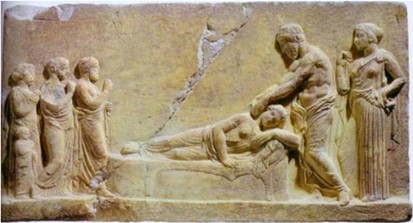
Massage therapy began around 5000 years ago in China, India and Greece where it was considered as a sacred system of healing. Fast forwarding a few centuries, in Greece athletes used massage to condition their bodies before competitions and doctors would often apply herbs and oils in combination with massage to treat various conditions. This is no different today. Many athletes across many sports will have regular sports massage to maintain flexibility and minimise pain.
The public only has to look at sports athletes to see evidence of the benefits of regular massage
Romans would travel to the baths for ‘spa’ treatments and full body massages, to stimulate circulation and loosen their joints- a remedy we still use to this day. So, massage and its positive benefits have been around for a long time.
What are the benefits of regular deep tissue massage for you?
Simply put, there are a lot of benefits, and they all add up to less pain, more flexibility, more enjoyment and a better quality of life.
Breaking down the benefits:
- Improve your quality of sleep
- Reduces your stress and lowers heart rate which provides an enhanced feeling of relaxation
- Improves your mental alertness
- Speeds up your recovery to soft tissue injuries
- Improves your circulation
- Stimulates movement of your lymphatic system, helping our body expel toxins
- Improves your joint flexibility
- Boosts your immune system by promoting white cell production
- Eases muscle pain
- Breaks down adhesions
- Reduces your symptoms of long term or chronic pain
- Releases your ‘feel good’ hormones which improves reduce stress, anxiety and depression by increasing levels of serotonin, dopamine and decreases levels of cortisol. This stimulates your feelings of relaxation and happiness and helps regulate your mood.
It Works
There is a reason that top athletes have regular massage and the reason is it works. It helps them achieve their best with less pain and more flexibility. The same goes for the GP’s in countries like Germany, where a course of massage is prescribed before drugs. Why? Because it works.
Why not let regular deep tissue massage work for you. Let it make you feel better, more relaxed, more able, with less pain, and enjoy a better quality of life.

If you would like to get these same benefits for yourself, then please call the clinic now and book an appointment with Katie. You won’t regret it. In fact, after a few massages you will feel better than you have for years.
Call 01889 881488 Now
Erica, Jean and Charlotte will be happy to help
The key to gaining the real benefits of deep tissue massage is by having regular massages. The first massages have a lot to do, breaking down old adhesions and getting tired and inflexible muscles to move properly again. After that you will really start to feel meaningful benefits.
To help you reach that point, we are including a special offer in this blog. Book and pay for a bundle of four massages and get the fifth one FREE.

Help For Ukraine
Our world is going through troubled times, the likes of which most of us have never had to witness so close to home. The degree of suffering in Ukraine is inhumane. Watching TV night after night with the increasing levels of destruction and suffering made us feel that we had to help in some way and the most rapid and effective way we saw was by donating money to those who could provide immediate on the ground help to those most in need. And this help is going to be needed for a long time to come.
We have thus started to contribute to two charities, the Red Cross to help people and the Blue Cross to help the animals also caught up in this tragedy. We will continue to contribute long after the war ends as this will take years to make good the damage done.
You Can Help Us
We have also decided, until our whole stock is exhausted, to contribute 100% of the value of sales of both Nicky Snazell’s books and her bespoke sterling silver jewellery to these charities. All books have been reduced to £5, the large jewellery to £10 and the small jewellery to £5.
These are fantastic prices for high quality books and jewellery and you can buy these for yourself or as gifts for others. Why not put away for future birthdays or Christmas or for a future therapists education.
Please help us help Ukraine. We guarantee 100% will go to these charities.
Thank you
Nicky & Alan
So, how do you choose your physiotherapy clinic in seven easy steps?
-
Physiotherapy skills and qualifications
The most important question - is the physiotherapist appropriately qualified and is there any evidence of ongoing learning and development? Although principals remain consistent, the skills and style of approach can be different as can the aftercare. Please make sure you get reassurances of qualifications and can see ongoing development of therapists.
-
Clinic Location
If you need physiotherapy, it is important to consider a local physiotherapist or one that is convenient to you. At Nicky Snazell Clinic we do provide specialist physiotherapy to clients from all over the world who come to Nicky for healing, but in general, we would recommend that you consider a therapist who is within a commutable distance of your work or home location. A commutable distance is 40-60mins for the right care, Nicky Snazell Pain Relief Clinic service; Stafford, Lichfield, Cannock, Rugeley & Stone.
-
Style of approach
Like people, physiotherapists are all different. While we hope that they all subscribe to the highest possible standards and approaches, it is important that you make sure that from the initial consultation you feel connected with your therapist and their unique style of approach.
Consider the following:
- Have your questions been answered?
- Did you feel a connection with the therapist?
- Are you clear on the next steps?
- Did the therapist explain costs?
-
Getting to the root cause
Spending time to find the root cause of pain is more important than the treatment itself. We find some clients have pain that is the result of unresolved childhood issues, bereavement and work-stress for example. Without spending the time to really understand your unique situation, often it can be like treating the surface of the problem and not the long-term view of the issue.
-
Ongoing Physiotherapy care
Once your initial condition and pain are 'fixed', ongoing care is essential. As they say, prevention is better than cure, so periodic check-ups and follow-ups will help ensure that you are maintaining your health. We quite often treat sports injuries and also recommend massage for clients which can relax and rejuvenate you avoiding the aggravation of the problem area.
-
Other services
Sometimes you may receive physiotherapy which can show that you would benefit from other services such as electro-acupuncture, the aforementioned massage. Does your therapist offer other services to support your wellbeing?
-
Customer service
A good physiotherapy clinic has a team who can facilitate customer support and great customer service, like helping you to book your appointments, reminders and periodic communication in the form of useful insights, tips and observations to help.
If you are looking for a Physiotherapist why not give our team a call: 01889 881 488
This is the fifth part in a series of blogs looking at the process of a physiotherapy assessment and treatment plan. If you have missed the 4 earlier blogs, then here are the links:
A Different Perspective On Your Physiotherapy Assessment
The Subjective Physiotherapy Assessment
The Subjective Physiotherapy Assessment – Part 2
Your prescription is the final part of the physiotherapy assessment process. After we've got a connection. We have learned who your authentic self is. We’ve gone through the four keys analysis, to assess your immune system and general health. We have worked out what’s going on with you in terms of food, movement, stress, lifestyle and the way that you use your mind. And we’ve looked and listened to your physical being, all the sensations that are going on your physical being. How sensitive you are. How much warmth, your circulation. The hesitancy when we move part of the body, the link with your eyes and your brain. The tone in that part of the body. And we've worked out what's going on, at that moment, to the best of our knowledge.
Only then do we decide on a tailor-made prescription for you, which can be a combination of many things. These may need to be in my clinic, or there may be a lot of things you can do at home as you don't really need us to be there for you, apart from just encouraging you along the way. It may also involve physical treatments, via just laying on hands, massage, that connection, dry needling, acupuncture, shockwave, manipulation, exercise advice. You name it, there's a myriad of physical hands-on treatments that we do.
We will write a prescription that's tailor-made just for you. It will be based on that moment in time, your immune system, your mind, your lifestyle and your available time. It will then progress to help your body get to the best you can be for your age, with whatever problem that you have. That is what tailor-made means. It means being listened to. And it means prescribing that medicine, be it in terms of a pharmaceutical drug, be it in terms of herbal medicine, be in terms in what we do, which is physically treating you and listening to you and looking at you holistically.
That's what we do.
If you are in pain right now and you feel confident we can help, then why not call. Erica, Jean and Charlotte will be happy to help.
Call 01889 881488 Now
p.s. Don’t try to book online at this time as that is only suitable for existing clients already being treated for an existing problem.
Ok, you are in pain, you have tried the obvious remedies, like pain killers and anti-inflammatories or a bit of exercise, but they didn’t fix the problem. You don’t want to be on drugs for too long, so you are thinking about getting to see a physiotherapist to assess you properly and find out what the problem really is and how best to fix it.
This presents you with a number of problems, such as where is the best physiotherapy clinic to go to and is it experienced with helping your type of problem. If you have friends or family who can provide help, based on their own experiences, then great. If not, the next best thing is to look at Google reviews and /or ask on social media. If you want some help on how to choose a clinic and what you need to ask, then click on this link How to Choose A Physiotherapy Clinic
You may have assumed that a physical assessment will be the first step.
That is the mistake that so many make, missing out the vital steps of creating the right environment to build connection and trust, and gaining a deeper understanding of your important beliefs. Make that mistake and you are destined to gain so much less.
Many of the assessment skills we use at my clinic are not common in the UK or anywhere else in the world. I am fortunate to have studied and qualified at the highest level in specific pain relief techniques and as a result, I have learnt and ingrained advanced assessment techniques in myself and the rest of my team.
Thus today, I want to approach this from a different angle, one you might not have thought of as being important, but trust me, it’s vital to a successful outcome. It’s the environment of the assessment room, and that means not only your room but the physiotherapists as well when the assessment is being done virtually.
You see, we all have an inherent ability to recognise if there is a true focus on the problem and that you are being listened to. If the environment is full of distractions or interruptions, then your physiotherapist’s thoughts will be disrupted and you will sense it. Your physiotherapist needs to be in the present moment, focussed and not allowing other thoughts to clutter up their head.
That’s my number one piece of advice.
Clearly, the environment is much better when you are face to face with the physiotherapist who is assessing you. There’s much less probability of distraction and that vital bond of trust is so much easier to build.
If your physiotherapist practices mindfulness techniques, they will induce a mental state capable of focussed attention on you. Your healing will commence as soon as you sense the caring intention.
I’m going to continue this explanation of how to achieve a successful assessment in more blogs. If you want me to keep with me on this journey, look out for my next instalment ‘The Subjective Physiotherapy Assessment’, which continues to look at this topic from a new perspective.
In the meantime, if you are in pain right now and you feel confident we can help, then why not call now. Erica, Jean and Charlotte will be happy to help.
Call 01889 881488 Now
p.s. Don’t try to book online at this time as that is only suitable for existing clients already being treated for an existing problem.
How can I relieve neck pain? The first thing to understand is how this happened, neck pain can be caused by other conditions such as muscle weakness in the shoulders, perhaps lifestyles such as workplace seating or even sports. Take a moment to consider what could be causing yours. While doing this, think about the type of pain you have. Is it a strain or a trapped nerve?
What does a trapped nerve in neck feel like?

A trapped never typically feels more painful in certain positions, and the pain again can be shooting, described as electric or pulsing. A trapped nerve can throb and jolt when you are moving. A strain usually feels more like a burn or a tear; these sensations can be confusing, so please do not worry if you struggle to distinguish between the two - Our team can help you understand this better and decide the best ways to help you.
How long does neck strain take to heal?
A strain can take between 24-hours and a week to recover. If you are concerned Nicky Snazell can help you with pain relief, it is still worth considering what caused this. The underlying source is always the best way to provide you with long-term pain relief, and maintenance can reduce reoccurrence.
What is the fastest way to fix a stiff neck?
If you are not ready to consider treatment, we recommend gentle stretches and a gentle massage in-between cooling and warming treatments like an ice-pack and a hot water bottle/wheat/rice bag. Be careful when doing this yourself. If you are unsure how to manage this effectively, contact us.
Which massage is best for neck pain?
This depends on how you got the neck pain; if it was doing sports, then as you might expect, sports massage could be the proper treatment. Typically, massage is the right treatment for neck pain; manipulating the soft tissue can relax the problem and promote blood flow and healing.
Where can you go for help with neck pain?
Nicky Snazell pain relief clinic in Stafford can help with neck pain. Please view this page for more information on neck pain, or contact us. Our experienced team of physiotherapists will help you navigate your pain and provide the most effective advice to help you long term.
Like a traditional massage, sports massage more intensely manipulates the soft tissues and tendons. In addition, the masseuse uses more strength to purge the muscles, which helps to loosen and condition the essential structural integrity. As a result, you are less likely to become injured during sports or physical activity.
Sports massage also helps to promote blood flow, which can aid healing and recovery after intensive exercise, which is why you will often find sports massage administered before and after races at running clubs.
What are the common areas for sports massage?
- Typical sports massages include legs used by runners, athletes, hockey, cricket, and rugby players.
- As well as the common sports previously mentioned, Netball and Tennis are also popular with shoulder and lower back sports massage therapies.
- The lower back is also a widespread complaint from horse riders, and we have seen jockeys from all over the world.
What is a sports massage therapist?
A sports massage therapist administers the massage, 'a masseuse', and is often referred to as a therapist as this serves a purpose and not just for pleasure. Sports massage has more medical benefits than other massages which are for relaxation and wellbeing.
What is a sports massage like?
A sports massage is slightly more aggressive than a typical massage, so it can be somewhat uncomfortable initially; however, your therapist will discuss this with you throughout so that it is tolerable. The fact it is more aggressive should not put you off because the effectiveness of the sports massage is driven by the pressure placed on the soft tissues.
There are many reasons that sports massage is so good for you and keeps you injury-free. This article covers some of the reasons sports massage is good for you.
What is sports massage good for?
- It is good for legs, shoulders, lower back, knees, calves, and neck.
- It is good for keeping your joints stable and loose, reducing the risk of sports injuries.
- It is ideal for those who are physically active, runners and hikers.
- It is good for people who have previous injuries to stave off issues resurfacing.
How can Nicky Snazell Pain Relief Clinic help?
Pain relief clinic is here to help; you will see one of our very experienced team. From there, we will discuss your specific needs and then complete your wellness programme. Nicky and the Pain Relief Clinic look forward to welcoming you aboard. If you are a first-time client, then please use the contact form; if you are an existing patient, you can use the online booking form.
Rotator Cuff Physiotherapy
Many have heard of the rotator cuff in the shoulder and, not surprisingly, believe it to be a single part of the shoulder. The rotator cuff is, in fact, a group of four muscles that work together to provide dynamic stability of the shoulder joint, helping to control the joint during rotation:
- Supraspinatus
- Infraspinatus
- Subscapularis
- Teres Minor
The Supraspinatus is a small muscle which you can feel above the bony ridge on the back of your shoulder blade (scapula). It attaches to the top of the arm bone (humerus), just below the shoulder joint. The task of this muscle is to move the arm sideways away from the body for the first 15 degrees. After that other muscles take over most of the load, it is an area of the should that can be torn and is popular for 'Rotator Cuff Physiotherapy'
The Infraspinatus is a thick triangular muscle, which occupies the main part of the sculptured dent in the back of the shoulder blade, below the bony ridge. As one of the four muscles of the rotator cuff, the main function of the infraspinatus is to turn the arm out as in the backhand in tennis and stabilise the shoulder joint.
The Subscapularis is a large triangular muscle at the front of the shoulder blade, between the shoulder blade and the rib cage. It attaches to the top of the arm bone (humerus) and into the front of the shoulder capsule. Its role is to turn the arm in.
The Teres Minor muscle sits below the Infraspinatus. It is quite a small rounded muscle and its primary task is to stop the arm moving up when it is moved out sideways (abducted). It also helps the Infraspinatus turn the arm out.
TREATMENTS FOR ROTATOR CUFF TENDINITIS
Rotator cuff tendinitis describes the inflammatory response of one or more of the four rotator cuff tendons, due to impingement or overuse, and leading to more and more micro-trauma that can then lead to a tendon rupture and will require Rotator Cuff Physiotherapy.
The inflamed thickening of the tendons often causes the rotator cuff tendons to become trapped under the acromion (the bony projection of the shoulder blade over the shoulder joint) – like a carpet stuck under a door – causing sub-acromial impingement. Failure to heal then leads to further damage. Early treatment of tendinitis, therefore, is necessary in order to prevent the development of more chronic and serious conditions.
Treatment can include: first and foremost scapula re-education exercises, postural exercises to lessen the impingement, gentle shoulder mobilisations and massage, aided by local electrotherapies, such as laser, pulsed shortwave, shockwave and deep oscillation. Specific rehab exercises can help guide you back to full fitness.
Physiotherapy Treatment For Vertigo Caused By BPPV
Vertigo is a problem that affects around half the population at some point in their lives and is more common as we get older. Fortunately, the symptoms usually only last for a few seconds to a minute or so, but the symptoms are very unpleasant including:
• Nausea and vomiting
• Dizziness
• Fainting
• A sense of rotating
• Inability to stand or walk
What Causes Vertigo
It is widely accepted as the most common cause of vertigo is BPPV (Benign Paroxysmal Positional Vertigo) and this is linked to the 3 semi-circular canals in the inner ear. The role of these canals is to sense the position of the head in the 3 axes of up /down, right / left, forward/ backwards. If any incorrect signals occur, the brain doesn’t know where your head is and gets confused.
Faulty signals are caused by very small chalk crystals becoming loose and getting into the semi-circular canals. These loose crystals then move in the canals, stimulating faulty signals.
The types of movement which most frequently initiate a vertigo attack are rolling over in bed, getting out of bed, sitting up after lying flat or looking up or down.
Vertigo Treatment
Left untreated, vertigo will usually resolve itself but may take several months. Fortunately, treatment is fairly simple and painless and typically no more than 3 specialised Physiotherapy treatments are needed over a couple of weeks.
David Paling, a senior physiotherapist and our clinical lead can diagnose and treat BPPV.
If you or someone you know is suffering from vertigo, then physiotherapy treatment with us should seriously be considered.
Call the clinic now on 01889 881488 and ask for an assessment with David.